
















Army hopeful finally wins after 11th attempt
By Thokozani Mazibuko
An army hopeful has finally secured victory in the ongoing national army recruitment races on her 11th attempt, raising fresh concerns over vetting weaknesses after she managed to participate in multiple constituencies where she does not belong.
The woman, whose identity Eswatini Sunday is withholding for ethical reasons, has been disqualified in seven constituencies for failing eligibility checks, while four other constituencies failed to detect that she was not a resident and allowed her to run. In two of those, she finished second, before finally winning her most recent race.
Her persistence has impressed some observers, but her repeated appearances across the country have highlighted a growing administrative concern: fraudulent participation by individuals hoping to improve their chances of securing one of the limited army posts.
Vetting under spotlight
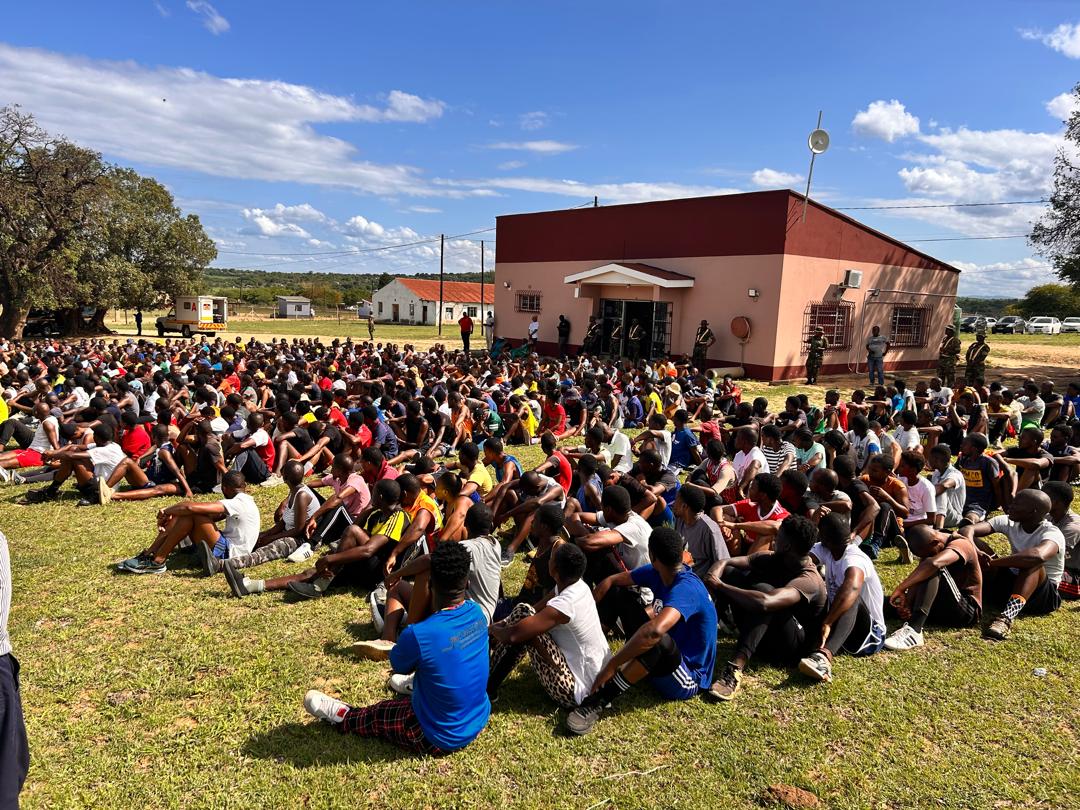
The responsibility of verifying eligibility rests on Bucopho officials at each Inkhundla, with army officers relying on their confirmation. However, as the recruitment exercise enters its advanced stages with more than 42 constituencies already completed complaints continue to surface about people exploiting loopholes to run in areas outside their home Inkhundla.
Speaking to Eswatini Sunday shortly after her win, the hopeful admitted she did not even know the name of the constituency where she had just secured first place, a revelation that further underscored the gaps in the screening system.
“I just kept trying,” she said briefly. “I didn’t even check the name of the place. I just wanted to run and show what I can do.”
Mixed reactions
Her story has generated mixed reactions across the country. While some community members have hailed her resilience and determination, others argue that her actions amount to abuse of the recruitment process and undermine fairness for genuine local candidates.
“This shows the system needs tightening,” said one community leader. “If someone can run 11 times, across so many constituencies, and win where she doesn’t even live, then something is wrong.”
Security analysts warn that the rising number of complaints reflects widespread confusion or manipulation within the administrative side of the recruitment exercise, which the army has traditionally relied on rural structures to manage.
As the recruitment continues, calls are intensifying for clearer verification procedures, improved coordination between Bucopho and army officials, and tougher penalties for fraudulent participation.
The army has not yet issued a formal statement regarding this latest case, but insiders say such incidents may force a review of the current system.
With more recruitment races still ahead, the episode has become a symbol of both the determination of job-seekers and the need for stronger oversight in one of the country’s most competitive public selection processes.
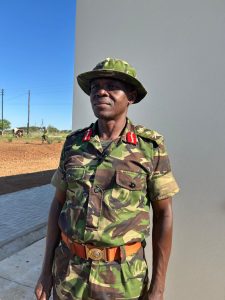
Brigadier General Dlamini says results stand once vetting is cleared
A determined army hopeful who finally won a constituency race after 11 attempts has ignited new debate over the credibility of the vetting system overseeing this year’s army recruitment exercise.
Her success, achieved after repeatedly appearing in different constituencies, has drawn the attention of officials and community leaders who now question whether local verification processes are robust enough to ensure fairness.
The woman, whose identity is being protected by Eswatini Sunday, captured public attention not only for her persistence but also for how her journey exposed inconsistencies in the verification checks that determine whether a candidate belongs to a specific Inkhundla.
While authorities have confirmed that the issue has surfaced in several constituencies, this particular case has become a focal point because of the sheer number of attempts involved.
Speaking in one of his recent media interviews, Brigadier General Sotja Dlamini reaffirmed the army’s reliance on the initial verification conducted by Bucopho at constituency level.
He stressed that the military does not intervene once candidates have been cleared to line up for the race.
“We rely on vetting which is done by the Bucopho,” he said in an earlier interview during the recruitment circuit. “After vetting, the army hopefuls are then allowed to participate in the army recruitment race. Results cannot then be overturned after the race.”
His comments come amid mounting questions over how some hopefuls managed to pass through multiple constituencies undetected, raising concerns that communities may not be applying uniform standards during the verification phase.
The recruitment drive has so far covered over 42 constituencies, and reports of hopefuls participating outside their rightful areas have triggered a flurry of complaints.
Constituencies differ in how they record, check and confirm residency, and insiders say some rely heavily on verbal confirmation or outdated lists a vulnerability that ambitious applicants reportedly exploit.
Some Bucopho officials privately admit the surge in participants has strained their verification teams, with thousands showing up in some areas, making it difficult to thoroughly vet every individual.
Others insist they follow all procedures but point fingers at hopefuls who arrive armed with convincing and sometimes misleading information.
In the latest case, the young woman’s ability to enter races across multiple regions has been described by commentators as both a sign of her determination and a symptom of weak administrative controls.
The fact that she eventually secured a first-place finish has added weight to calls for improved coordination between local authorities and the army.
Observers also note how she reportedly performed well in several constituencies, sometimes placing near the top, suggesting she might have been a strong competitor regardless of where she ran.
However, many argue that the principle of fair representation must remain central to the integrity of the recruitment process.
Community leaders and activists have called for stricter documentation requirements, including mandatory production of proof of residence and tighter coordination between Inkhundla offices.
They also propose a consolidated digital database to curb multiple entries and ensure that each candidate participates only once.
“The stakes are high,” said a community elder familiar with the recruitment process.
“This is a national security exercise, and the public must be confident that the system is fair.”
While the army has not announced any formal policy changes, insiders predict a thorough review of how constituencies conduct preliminary vetting before the next phase of recruitment.
The General’s reaffirmation that results cannot be reversed once participants are cleared has placed added pressure on the Bucopho structures to ensure accuracy from the outset.
For now, the hopeful’s victory stands and her story continues to spark nationwide discussion about the need for modernised systems that both protect the integrity of the process and uphold fairness for thousands of young Swazis pursuing military careers.