













Employment Bill hits snag
By Delisa Magagula
The long-awaited Employment Bill, which aims to overhaul Eswatini’s four-decade-old labour law framework, has once again stalled in Parliament.
The stall this time is due to the unavailability of key members of the Senate Portfolio Committee tasked with its review.
The Bill, tabled under a certificate of urgency by the Minister of Labour and Social Security, Phila Buthelezi, remains in limbo months after its initial presentation.
Despite workshops and consultations concluded earlier this year, the legislative process has not advanced as scheduled.
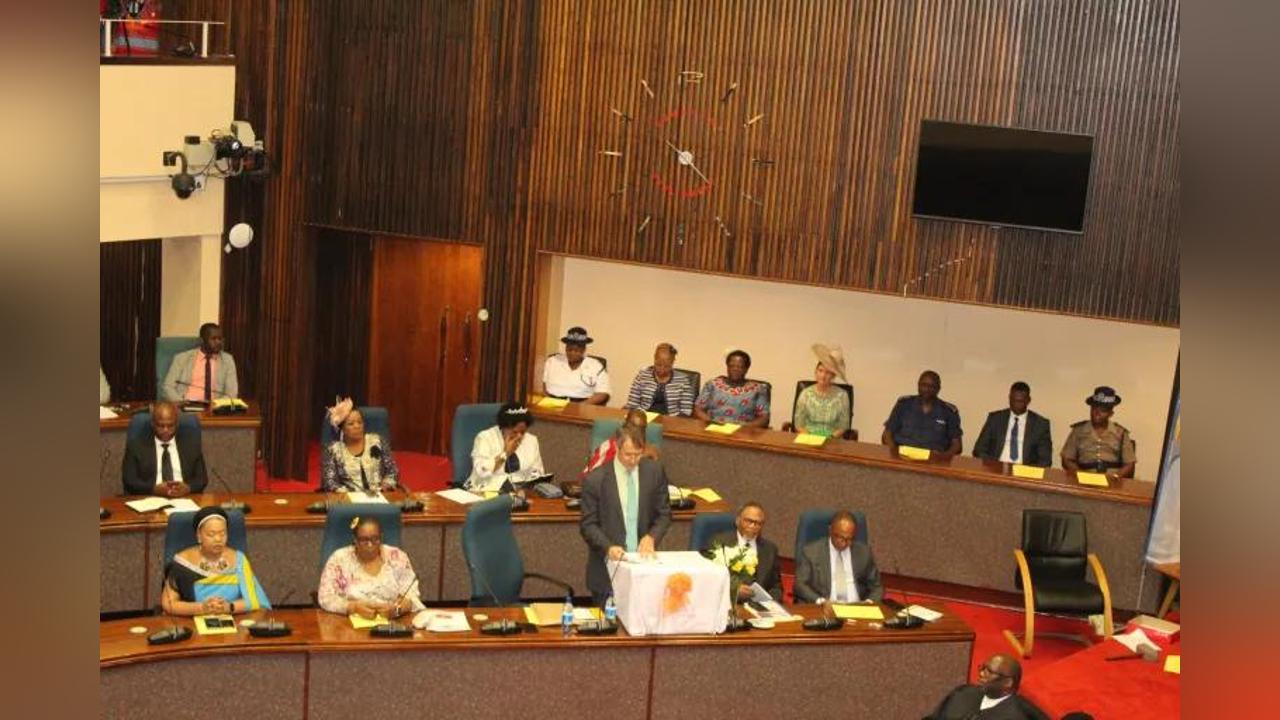
The delay was confirmed by the Ministry of Labour and Social Security in its Second Quarter Performance Report, tabled before the House of Assembly and subsequently debated during a ministerial question-and-answer session.
When questioned by Members of Parliament on what was impeding progress on the Bill, the Ministry responded that the legislation is still awaiting presentation to the Senate Portfolio Committee.
“The Employment Bill is currently awaiting presentation to the Senate Portfolio Committee members.
It is regrettable that this exercise, though previously scheduled, has been postponed on more than one occasion due to the unavailability of key committee members who had to attend external engagements.
A new date will soon be scheduled, with measures taken to ensure that all members are available and no further postponements occur,” said the Ministry in its report.
This explanation indicates that the Bill, which was tabled in Parliament under a certificate of urgency, has effectively been snubbed by the committee through repeated postponements. The lack of quorum and scheduling conflicts have resulted in the delay of a reform process that has already stretched over several years.
Worth mentioning is that the Employment Bill No. 12 of 2024 seeks to repeal and replace the Employment Act No. 5 of 1980, modernising Eswatini’s employment framework to align with Section 32 of the Constitution, which guarantees worker rights, and with international labour standards under the International Labour Organisation (ILO).
The bill will ensure regulation of fixed-term and casual contracts; employers will be restricted from hiring workers as casuals when the work is full-time or continuous in nature.
Protection for part-time and seasonal employees: The Bill grants proportional access to benefits such as leave and sick pay.
Abolition of ‘Triangular employment or labour brokering, Section 129 proposes to prohibit third-party labour supply arrangements, requiring all workers to be directly employed by the business they work for.
It will also expand worker protections, strengthen safeguards against unfair dismissal, discrimination, and harassment, enhance labour inspection, the Bill empower the Labour Commissioner’s office to enforce standards and levy penalties for violations.
Meanwhile, the proposed changes are viewed by labour groups as long overdue. Business organisations, including Business Eswatini, have warned that prohibiting triangular employment could result in the loss of over 20,000 jobs, particularly in sectors dependent on outsourced or agency labour.
The repeated postponements have drawn concern from both Parliament and the Ministry itself, as the certificate of urgency requires expedited handling.
Workshops on the Bill were concluded months ago, with the intention that the legislation would move swiftly to Senate committee review and final passage.
Instead, the process has been hindered by what officials describe as external engagements of committee members, making it impossible to achieve a quorum.
The Ministry’s tone in its report reflected frustration but also restraint. While not directly criticising Parliament, the Ministry confirmed that a new date will be set for presentation and expressed hope that measures will be taken to ensure that all members are available and no further postponements occur.
This marks the second time the Bill has been delayed in Parliament. The earlier version, Employment Bill No. 7 of 2023, lapsed when the 11th Parliament was dissolved, forcing its reintroduction under the 12th Parliament as Bill No. 12 of 2024.
During the same parliamentary session, Members of Parliament also raised concerns about leadership and operational gaps within the Ministry.
In the same report, one question pointed to the absence of a substantive Labour Commissioner, with the post having been vacant for months.
In response, the Ministry revealed, they have since received a waiver from the Ministry of Public Service and we will soon be appointing a substantive Commissioner of Labour.
This confirmation suggests that the position, which is central to the implementation of both the current and proposed labour frameworks, will soon be filled.
However, MPs also pressed the Ministry about the practical side of enforcing labour standards, particularly in rural areas where reports of worker exploitation persist.
In its written response, the Ministry acknowledged that while more vehicles and inspectors had been allocated, challenges persist in conducting comprehensive inspections nationwide.
“The total number of inspections conducted includes those carried out in rural areas, as our offices are decentralised across all four regions of the country,” the response read.
“However, we are currently facing challenges related to transport and fuel. Although the Government has procured four vehicles for the Department, some stations still lack vehicles, and fuel allocations are rationed weekly.
These constraints have negatively impacted our ability to carry out inspections effectively,” further read the report.
The Ministry further disclosed that the number of labour inspectors remains insufficient to cover all expected areas.
“With additional inspectors, we would be able to extend our coverage significantly. Due to the above challenges, we often prioritise inspections in cluster areas rather than isolated ones,” the response added.
Worth noting is that this logistical bottleneck directly affects the Ministry’s ability to monitor compliance with existing employment laws and would likely hinder the enforcement of the new provisions if the Employment Bill is passed.
The Bill has generated strong reactions from the private sector, particularly regarding Section 129, which bans a triangular employment arrangement where workers are hired and paid by a third party but perform work for another company.
According to Business Eswatini, the clause could affect more than 20,000 workers in the security, cleaning, and retail sectors, which often rely on labour brokers.
The organisation estimates that the financial burden of severance pay alone could exceed E250 million if all such contracts are terminated.
Business Eswatini has urged the government to consider regulation rather than prohibition, arguing that abolishing the practice entirely could undermine flexibility and lead to mass retrenchments.
The Ministry of Labour and Social Security has not yet issued a formal response to those economic projections, although it has emphasised that the Bill was developed after consultation with the Labour Advisory Board, which includes employer and union representatives.
Should the Employment Bill eventually pass into law, it will mark one of the most significant overhauls of Eswatini’s labour legislation in over 40 years.
For employees, the Bill promises:
1. Greater protection against unfair dismissal and discrimination.
2. Expanded rights for part-time, casual, and seasonal workers.
3. Clearer legal recourse through the Labour Commissioner’s office.
For employers, the Bill introduces:
1. Stricter compliance obligations and potential penalties for violations.
2. Increased administrative burden in drafting and renewing employment contracts.
3. The removal of triangular employment as a labour flexibility tool.
The Bill’s success will depend not only on its passage but also on the Ministry’s capacity to enforce it. The labour inspection challenges outlined in the Second Quarter Report suggest that additional resources will be needed to make the reforms effective.
As of October 2025, the Employment Bill remains pending before the Senate Portfolio Committee, awaiting rescheduling for formal presentation.
The Ministry of Labour and Social Security maintains that the Bill remains a priority and will soon be re-tabled once all committee members are available.