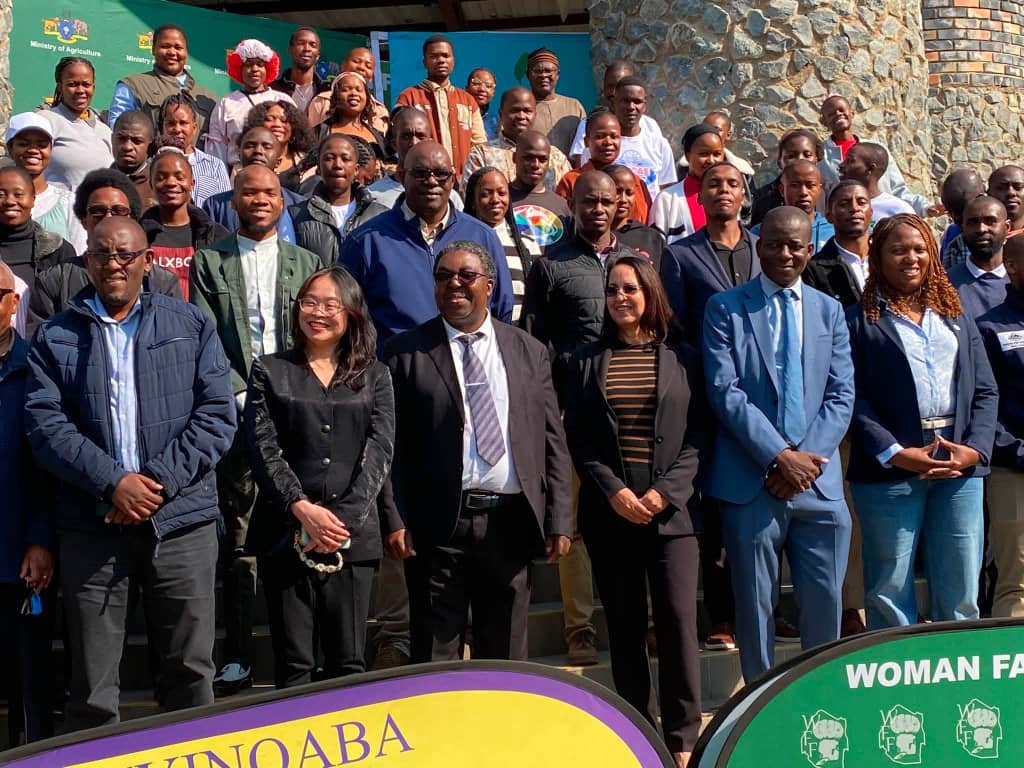
A groundbreaking E2.4 million climate-smart agriculture initiative is set to empower 200 young emaSwati with practical farming and agribusiness skills, reinforcing the country’s commitment to youth employment, sustainable agriculture and long-term food security.
The programme, funded by the Government of the Republic of China (Taiwan) for US$146 000 (about E2.4 million), was officially launched at Sidvokodvo in the Manzini region.
It is being implemented through a partnership involving the Ministry of Agriculture, the Ministry of Education and Training, the Woman Farmer Foundation and Taiwan. Speaking during the launch, 
Minister of Sports, Culture and Youth Affairs Bongani Nzima said the government was deliberately positioning agriculture as a modern, technology-driven industry capable of creating employment and wealth for young people.
He said the country needed young people who were prepared to embrace innovation and modern technology to transform the agricultural sector.
“The future of Eswatini lies in the hands of young people who are prepared to innovate, embrace technology and seize opportunities.
Agriculture is no longer about survival; it is about entrepreneurship, wealth creation and transforming communities,” he said.
Nzima urged the beneficiaries to take the opportunity seriously, saying the programme should produce employers rather than job seekers.

He said the government remained committed to creating opportunities that would enable young people to participate meaningfully in national development while contributing to economic growth and food security.
Principal Secretary in the Ministry of Agriculture Sydney Simelane, speaking on behalf of Agriculture Minister Mandla Tshawuka, said climate change had become one of the greatest threats facing agriculture in Eswatini.
He said prolonged droughts, unpredictable rainfall and rising temperatures continued to reduce agricultural productivity, making it necessary for the country to adopt modern farming methods.
Simelane said tunnel farming offered a practical solution by allowing farmers to produce crops year-round while conserving water and protecting them from harsh weather conditions. He said the programme demonstrated the government’s commitment to modernising agriculture through innovation.
The training programme has continued to expand since its introduction.
The first intake in 2024 graduated 86 young people, while more than 160 completed the programme in 2025.
This year’s intake of 200 is the largest since the initiative began.
According to Simelane, the Woman Farmer Foundation has trained more than 500 young people since 2021, with many establishing successful tunnel farming businesses and creating employment within their communities.
Participants in the latest programme will receive practical training in tunnel farming, irrigation systems, climate-smart production, agribusiness management, entrepreneurship, financial literacy and sustainable agriculture.