






Senate President pledges Parliament’s commitment to implementing the Grand Plan for National Transformation
By Siphesihle Dlamini
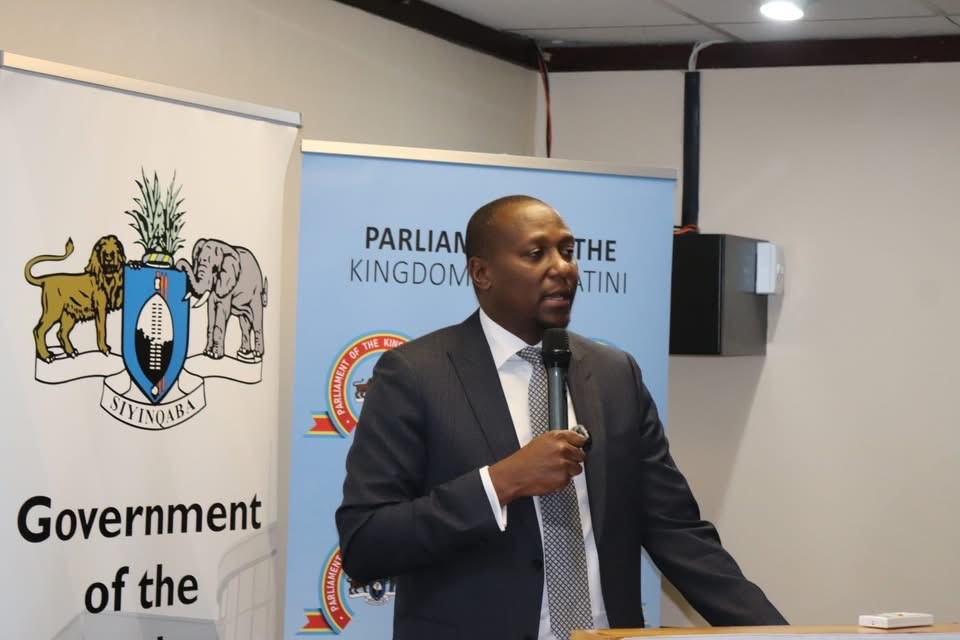
Senate President Lindiwe Dlamini has pledged that Parliament will play a crucial role in ensuring the Grand Plan for National Transformation transitions from mere documentation to tangible implementation.
This commitment, according to the Senate President, involves legislative refinement, thorough budget scrutiny, and ongoing oversight, all aimed at transforming the vision into a reality that impacts the lives of emaSwati.
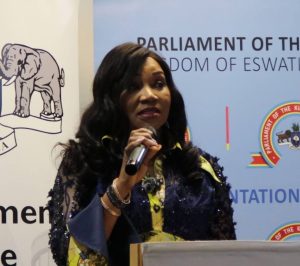
Prime Minister Russell Dlamini, alongside selected Cabinet Ministers, was engaging Senators in Pigg’s Peak to discuss the Grand Plan, which embodies His Majesty’s vision for a developed Eswatini.
The Prime Minister has called on Senators to unite in support of this ambitious initiative, which reflects the aspirations of the people articulated during the Sibaya gathering.
During the opening session of this critical engagement, the Prime Minister elaborated on how the Grand Plan aims to build upon the successes and lessons learned from previous development strategies while addressing existing gaps.
He emphasised that the goal is to achieve sustainable economic prosperity over the next two to three decades.
“Past plans laid an important foundation,” the PM noted, highlighting gains in agricultural productivity, increased access to basic education, and support for small and medium enterprises (SMEs).
However, he pointed out that structural issues such as inadequate infrastructure, gaps in the health sector, and limited private sector development continue to hinder progress.
The Prime Minister framed the current moment as a pivotal juncture for Eswatini. “Today, Eswatini stands at a critical crossroads. Will we continue the path that has led us here today, or will we brave a different path altogether?” he asked.
The Grand Plan represents the government’s ambition to aim higher than ever before and to explore new possibilities for the nation.
He further asserted that the kingdom should aspire to achieve high-income status within the next two to three decades, positioning Eswatini among the world’s most developed countries, as frequently mentioned by His Majesty.
“To get there, we need a deliberate and credible long-term strategy that corrals the whole of Government. We must work together to see this future materialise in the coming years,” he stated.
The Grand Plan proposes a transformative 30-year agenda anchored around three main pillars: Economic Transformation, Social Transformation, and Government Transformation.
This framework is designed to build on previous successes while addressing their shortcomings, ensuring that growth is broad-based, socially inclusive, and institutionally sustainable.