
















Africa unites in Eswatini for First Agroecology and Climate Justice Indaba
By Thokozani Mazibuko
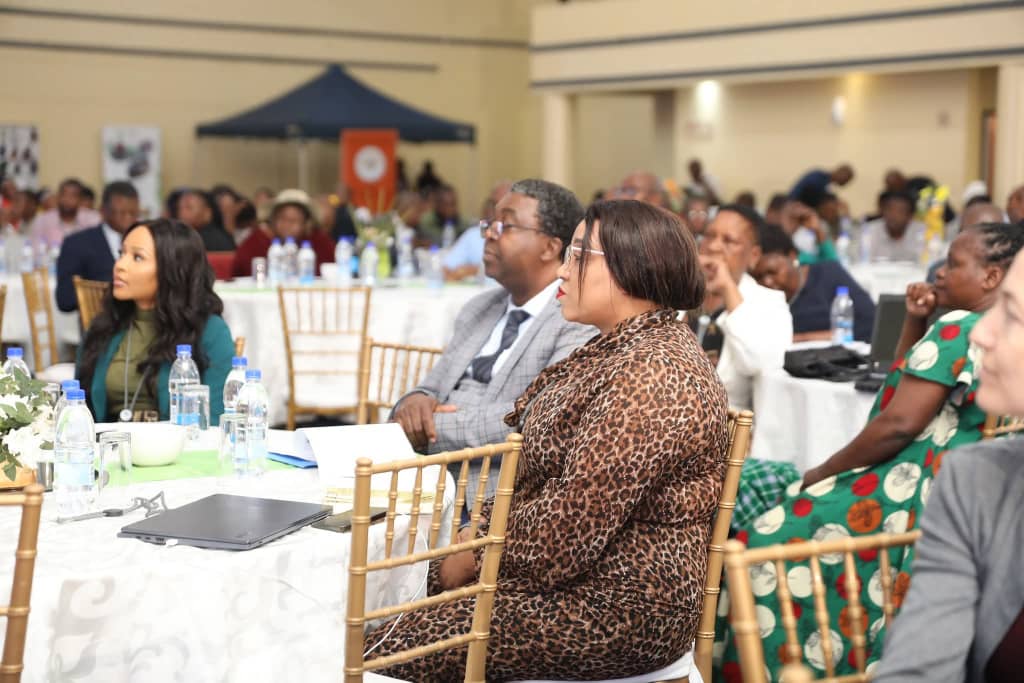
The Mavuso Exhibition Centre in Manzini became the centre of continental dialogue on food security and climate resilience this week, as PELUM Eswatini hosted the first-ever Sustainable Agriculture and Climate Justice Indaba.
The two-day gathering, themed “Agroecology for Food Systems Resilience and Climate Justice”, has brought together farmers, policymakers, researchers, and development partners from across Africa.
Delegates from Tanzania, Uganda, Kenya, Zimbabwe, and Eswatini converged to share strategies on how agroecology can address pressing agricultural and climate challenges.
The landmark event signals a new chapter in Africa’s effort to transform food systems while ensuring environmental justice and resilience against climate change.
What is Agroecology?
Agroecology is both a science and a practice. It applies ecological principles to the design and management of sustainable farming systems.
Unlike conventional agriculture, which often depends heavily on chemical inputs and monoculture production, agroecology promotes:
• Diversity in farming systems – encouraging crop rotation, intercropping, and integrating livestock.
• Soil health restoration – through organic composting, reduced tillage, and natural fertilization.
• Water conservation – adopting techniques that improve water use efficiency.
• Local seed preservation – strengthening farmers’ independence and resilience.
• Community-driven farming – placing farmers at the heart of decision-making and linking food production to cultural and social values.
It is widely recognized not just as a farming method, but as a pathway to climate action and social justice, since it reduces greenhouse gas emissions, promotes biodiversity, and empowers smallholder farmers—especially women and youth.
Key Discussions
The Indaba featured vibrant panel sessions and workshops. Among the most significant were:
• “Unpacking Agroecology in Relation to Sustainable Food Systems and Climate Resilience” – Experts emphasized that agroecology provides long-term solutions to food insecurity by building systems that can withstand floods, droughts, and pests worsened by climate change.
• “Agroecology and Climate Action: Leveraging Agroecology in Accelerating National Climate Action Agenda” – Speakers highlighted how governments can integrate agroecology into Nationally Determined Contributions (NDCs) under the Paris Agreement, making farming a front-line solution in combating climate change.
Participants agreed that conventional agriculture alone cannot guarantee food sovereignty in Africa, especially as climate patterns grow unpredictable.
RELATED: Parliament must enact tougher green laws – Deputy Senate President
Agroecology, they argued, offers a balance between productivity, sustainability, and justice ensuring that smallholder farmers, who produce up to 80% of Africa’s food, are not left behind.
A strong network of partners
The event’s success was made possible through a broad alliance of stakeholders, reflecting the urgency of agricultural and climate transformation in Africa. Key partners included:
• Ministry of Agriculture (Eswatini) – providing policy backing and national agricultural frameworks.
• COPSE (Coordinating Assembly of Non-Governmental Organisations) – ensuring civil society representation.
• Taiwan Africa Vegetable Initiative (TAVI) – promoting diversified, climate-smart vegetable farming.
• Eswatini Bank – exploring financing options for agroecological enterprises.
• European Union and Agroecology Fund – bringing international support and advocacy.
• World Vegetable Center – providing research and scientific input.
• Eswatini Environment Authority – aligning agroecology with environmental governance.
Their combined involvement underscores a continental consensus that agroecology should no longer be a marginal practice but a mainstream agricultural strategy.
Why this Indaba matters
Africa faces a dual crisis: food insecurity and climate vulnerability. According to the UN Food and Agriculture Organization (FAO), over 280 million Africans are undernourished, while the continent loses billions annually due to climate-related agricultural shocks.