








MPs punch holes in Millennium Project Unit Operations
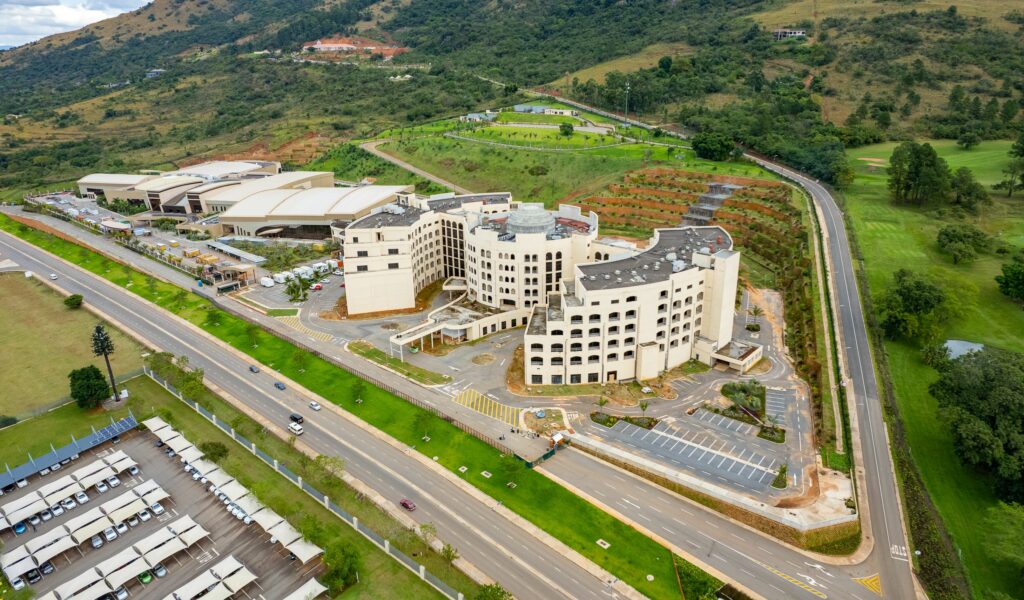 MPU has been assigned major capital-works responsibilities, including the development of the International Convention Centre (ICC)
By Delisa Magagula
The Millennium Projects Unit (MPU), under the Ministry of Economic Planning and Development, has come under parliamentary scrutiny amid growing concerns over its regulatory status, capacity, and oversight of multi-billion-emalangeni national projects.
During the recent House of Assembly debate on the Ministry’s Second Quarter Performance Report for the 2025/2026 financial year, Members of Parliament questioned the legitimacy and efficiency of the Unit, which they say operates without a clear legal framework despite managing massive infrastructure projects such as the International Convention Centre (ICC) and the Five-Star Hotel (FISH).
The Millennium Projects Unit was established in 2001 under the Ministry of Economic Planning and Development to fast-track strategic national infrastructure projects aligned with the National Development Strategy (NDS).
Its role includes project planning, implementation oversight, contract facilitation, and coordination between government and private sector partners.
However, despite handling multi-billion-emalangeni developments, the Unit remains alarmingly small currently staffed by just four officials, including two engineers, one economist, and a director.
The MPU’s Director, Patrick Mnisi, confirmed the limited staff complement during a recent Public Accounts Committee (PAC) sitting.
MPs raised questions about the legal basis for the MPU’s establishment, demanding to know which law or legislative instrument gives it the authority to manage such large-scale national projects.
In response, the Ministry clarified that the MPU was not created through an Act of Parliament, but rather through an executive directive and administrative arrangements within the Ministry.
The Unit operates as a technical and coordination body that reports to the Millennium Project Technical Committee, which in turn reports to Cabinet.
The Ministry admitted that the absence of a clear legal framework has created ambiguity around accountability and governance.
To address this, it is exploring options to formalise the Unit’s mandate through appropriate legislative instruments, which may include drafting regulations that clearly define the Unit’s scope, governance, and oversight mechanisms.
The Ministry further committed to tabling the relevant documentation and updates before Parliament once the legal review process is complete.
Parliament’s Portfolio Committee expressed concern over significant cost overruns in projects overseen by the MPU.
One cited example was the bulk earthworks cost for the ICC/FISH project, which ballooned from an initial E80 million to an estimated E567 million an increase of nearly 600 per cent with limited documentation or justification for the variation orders.
Lawmakers questioned how a unit with just four officials could effectively manage such large and complex projects, raising fears of overreliance on external consultants and potential misuse of funds.
“The Portfolio Committee recommends that the Ministry submit a report about the establishment of the Millennium Project Unit and the progress of the Unit being entrusted with heavy project funds within 14 days after the adoption of this report by Parliament,” reads part of the Committee’s recommendation.
The Committee went further to caution against assigning the upcoming construction of the new Parliament building to the MPU.
The report warns that lest they witness a recurrence of what is happening now about the long-overdue completion of the International Convention Centre.
MPs also queried the current status of the new Parliament building project, initially projected to begin by 2027.
In its response, the Ministry described the matter as sensitive, revealing that diplomatic considerations involving a visiting Vice President had influenced its decision to withhold public updates to avoid negative publicity.
“Unfortunately, the engagement did not yield any positive outcomes,” the Ministry stated, adding that a comprehensive update would be provided in the next reporting cycle.
While the Portfolio Committee stopped short of calling for the suspension of the MPU’s operations, its report signals serious parliamentary concern over the Unit’s lack of regulation, capacity, and oversight.
The Ministry now faces a 14-day deadline to present Parliament with detailed information on the MPU’s establishment, legal standing, staffing, and project management framework.