







DPM calls for good governance as foundation for economic growth
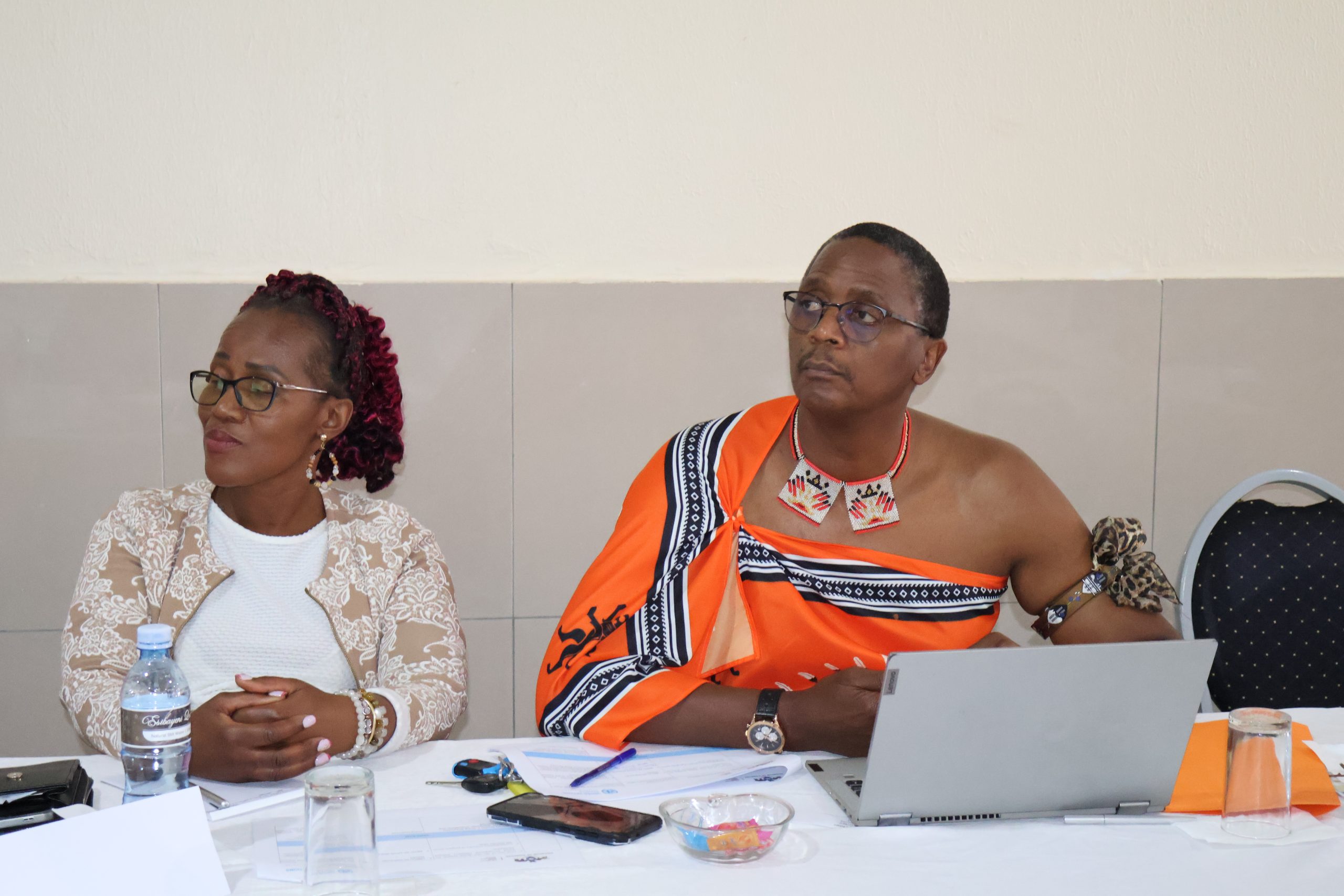 DPM's office US Makhosi Simelane and Director National Children's Services Nomcebo Nhlengetfwa listen to submissions during consultation exercise.
By Kwanele Dhladhla
Deputy Prime Minister (DPM) Thuli Dladla has underscored the importance of good governance as the cornerstone for economic recovery and sustainable development.
She urged all sectors of society to commit to transparency, accountability, and inclusivity as Eswatini prepares for the Second World Summit for Social Development (WSSD2).
Speaking during the national stakeholder consultation on social development held at Esibayeni Lodge on Wednesday, Dladla said the meeting provided a crucial platform for Eswatini to consolidate its priorities and clarify its national position ahead of the global summit to be held in November 2025 in Doha, Qatar.
She said the pre-summit marks a significant moment for Eswatini, a moment to reflect, recalibrate, and recommit.
The DPM highlighted that the principles of good governance, sustainable development, and social inclusion were central to the Kingdom’s National Development Plan (2023–2028) and the Government Programme of Action (2024–2028).
These frameworks, she said, aim to strengthen social protection, promote equitable access to services, and stimulate inclusive economic growth.
“Good governance remains the foundation for economic recovery and sustainable livelihoods. Our goal is to stimulate inclusive economic growth with a target of 12 percent by the 2029 financial year,” Dladla stressed during the event, where she was represented by Under Secretary Makhosi Simelane.
Reflecting on Eswatini’s progress since the 1995 Copenhagen Declaration on Social Development, Dladla said the country had made commendable advances in inclusive education, gender equality, access to healthcare, and disability inclusion.
She also cited ongoing efforts to improve climate resilience, food sovereignty, and social protection systems for vulnerable groups.
“These efforts are not just policy milestones, they are stories of transformation, of communities empowered, and of lives changed,” she said.
The DPM emphasised that the Doha Summit presents an opportunity for Eswatini to reaffirm its dedication to advancing the global social development agenda through key focus areas such as disability inclusion, climate adaptation, and sustainable development.
“As we approach WSSD2, it is imperative that we clarify Eswatini’s position on the summit’s key themes. We reaffirm our dedication to disability inclusion, strengthening adaptation
strategies under climate resilience, and accelerating progress on the Sustainable Development Goals through integrated national frameworks,” she noted.
Dladla called on stakeholders to use the consultation to consolidate Eswatini’s priorities and success stories, identifying best practices and lessons learned that could be shared at the global stage.
“This consultation will help us consolidate our national priorities and messages for WSSD2. We must identify success stories that showcase best practices, from grassroots innovations to policy-level breakthroughs. These will form the backbone of our engagement in Doha,” she said.
While celebrating progress, the DPM acknowledged the persistent social challenges that continue to hinder development, including youth unemployment, inequality, and gaps in social protection. She urged policymakers and social partners to propose actionable solutions that could be integrated into post-summit plans.
“We must confront the challenges that hinder progress and propose practical measures to bridge policy gaps. This is our opportunity to ensure that no one is left behind,” Dladla said.