














SACU pay-out in, Govt says every cent spent
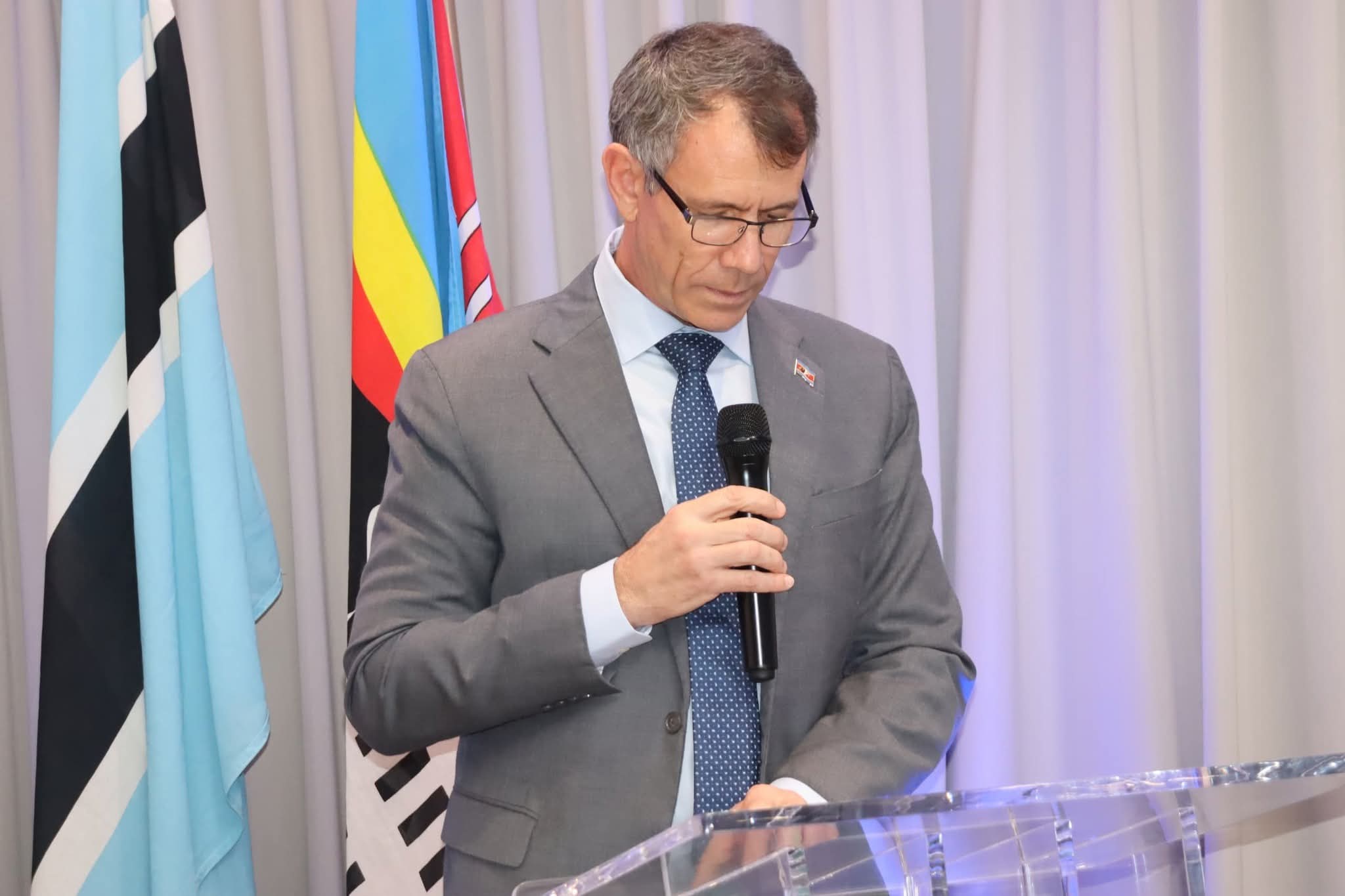 Minister of Finance Neal Rijkenberg
By Delisa Magagula
Eswatini has confirmed receiving the anticipated Southern African Customs Union (SACU) revenue payment.
Through the Ministry of Finance, the Government said the funds have already been allocated towards settling supplier invoices, financing capital projects, and meeting pension obligations.
In an interview, the Minister for Finance Neal?Rijkenberg, said the sum received was approximately E2.65 billion, rather than exactly that figure, and that the funds were already expended.
“The funding has landed and we have already spent all of it. We repaid the Central Bank for the advance, PSPF for the pension deductions, some capital projects, and some suppliers,” explained the Minister.
When pressed on whether the figure was precisely E2.65 billion, he said, it was approximately, and the names of the suppliers the Minister revealed they prioritised
“We paid the suppliers that had waited the longest,” said the Minister.
Worth noting is that, SACU is the customs union comprising Botswana, Eswatini, Lesotho, Namibia and South Africa.
Its revenue-sharing arrangement places duties collected at union external borders into a Common Revenue Pool (CRP), which is then distributed among members based on a formula.
For Eswatini, SACU receipts have historically formed a significant portion of total government revenue. According to an IMF report, SACU receipts accounted for an estimated 13.6 % of GDP in 2023, and remain a major fiscal pillar.
Earlier research noted that the kingdom was particularly vulnerable to fluctuations in SACU transfers.
Meanwhile independent reporting supports that the government had cleared verified supplier invoices submitted to Treasury by 2 July 2025.
Nevertheless, other supplier groups say that many invoices remain outstanding. A letter by health-sector suppliers to the ministry of health stated that more than E100 million in claims remain unpaid despite the public assurances.
A national supplier organisation, Business?Eswatini, confirmed that invoices verified and submitted by the July cut-off date appear to have been paid.
However, many smaller contractors insist that they still await payment and cite delays in line-ministries forwarding invoices as the main obstruction.
One supplier told the press that having to wait months for payment has forced firms to absorb interest costs, delay wages, or face closure.
Economists highlight that while high SACU transfers provide short-term relief for Eswatini’s budget, reliance on them leaves the country exposed to external shocks.
“While public debt remained moderate at 39.2 % of GDP in FY24/25, Eswatini faces higher borrowing costs than neighbouring countries.
Directors emphasised the importance of fiscal discipline given volatile SACU revenues,” reads an article from IMF.
Economist Mkhosi Thwala has warned of the direct impact of government non-payment on businesses and public service delivery.
“If a supplier who cooks for patients at a government hospital or the police service has not been paid the service delivery will be poor and government will be left to deal with angry patients and an agitated police service,” he said.
Business Eswatini Chief Executive Officer E Nathi Dlamini said while the SACU inflows had eased pressure on the Treasury, delayed payments remained a serious concern for many members.
“We appreciate the progress, but full clearance of arrears is critical to restoring confidence in government procurement,” he said.
A Mbabane-based contractor who supplies medical equipment said months-long payment delays had nearly forced him to close his business.
“We had to take out loans just to pay salaries. Getting paid now gives us breathing space, but it’s come too late for some,” said the supplier.