














Govt shifts salary review for security forces to Nov
By Kwanele Dhladhla
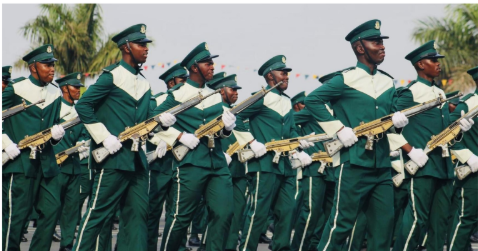
Government has announced that the long-awaited salary review for the country’s security forces will now be implemented in November 2025.
This follows delays linked to the ongoing remuneration alignment process and system constraints in the national payroll.
This was disclosed by Acting Government Spokesperson Thabile Mdluli, who said the decision was unavoidable due to overlapping financial adjustments and the need to finalise consultations on the salary review for the Umbutfo Eswatini Defence Force (UEDF), Royal Eswatini Police Service (REPS), and His Majesty’s Correctional Services (HMCS).
“Government wishes to update the nation on the unfortunate delay in the implementation of the salary review exercise for the country’s uniformed forces.
This regrettable development has been necessitated by several factors, among which is the implementation of the Phase II salary adjustment for uniformed forces in September 2025,” Mdluli said.
She explained that the rollout of Phase II meant that comprehensive consultations on the new salary review outcomes could not be completed in time for the planned October implementation.
“Consultants have assured government that the salary review component for the uniformed forces is being finalised in consultation with all relevant stakeholders to ensure a satisfactory outcome.
This process is expected to be completed on time to enable implementation by the normal pay dates in November 2025,” Mdluli added.
The government also confirmed that the Treasury Department was unable to process the October salaries for the security forces alongside other public servants due to technical limitations in the payroll system.
Mdluli explained that the payroll system could only process salaries for all permanent employees simultaneously, which meant that the uniformed forces were automatically affected by the broader delay in October salaries for public servants.
“Government regrets this unforeseen development and acknowledges the inconvenience it has caused. Members of the uniformed forces are assured that His Majesty’s Government values their contribution to national safety and security and remains committed to ensuring that their remuneration is reviewed reasonably, just like all other public servants,” she said.
The announcement follows recent adjustments under the Phase II remuneration alignments, which were finalised after lengthy negotiations between government and the staff associations of REPS and HMCS.
Earlier this year, Prime Minister Russell Dlamini confirmed implementation of the Phase II package, which benefitted both professional and functional ranks within the security services.
“The outcome of negotiations between government and the staff associations of the security forces has finally yielded positive results,” said the PM when announcing the conclusion of talks.
Under the professional adjustment levels, officers holding the ranks of inspector/chief officer, assistant superintendent, and superintendent received a once-off, retrospective back-pay calculated at an 8 per cent net present value (NPV) rate for up to 24 months, costing government E57 million annually for 952 officers.
For the functional adjustment levels, which included assistant inspector/assistant chief officer, sergeant, warder instructor, constable, and wardress, a three per cent basic salary increment was implemented, also backdated for up to two years. This category covered 13,119 officers, costing the government E171 million annually.
Meanwhile, the government has also announced new pay dates for civil servants in October. According to a memorandum issued by Accountant General Nomsa Simelane on October 18, permanent employees would be paid on October 27, while non-permanent employees were due to receive their salaries on October 31.
Simelane said the adjustment was necessary to allow for the proper input and testing of the new salary review scales.
“Government understands the importance of timely salary disbursement and appreciates the understanding and cooperation of all employees,”
she said, urging civil servants to plan ahead and ensure all stop orders and statutory deductions were adjusted accordingly to avoid penalties.
Principal Secretary (PS) in the Ministry of Public Service, Mthunzi Shabangu, confirmed that the delays were communicated to Public Sector Unions (PSUs) during ongoing discussions about the new pay structure.
Government recently committed to a 100 per cent implementation of the civil servants’ salary adjustments recommended under Scenario No. 3 of the Salary Review Report, with effect from October 2025 payday and backdated to April 2025.
It was detailed that 15 per cent of the six months’ back pay (April–September 2025) would be paid in October 2025, while the remaining 85 per cent would be disbursed in July 2026, the first month of the second quarter of the 2026/2027 financial year.
For employees in salary bands without an upward adjustment or whose grades were downgraded, he said government had approved a once-off five percent payment of their annual basic salary, to be paid in October 2025.
It was further announced that the revised housing and bus fare allowances would be implemented beginning October 2025, while the full housing allowance adjustments for salary Bands C–F and other consequential allowances would take effect in July 2026.