












Eswatini elected Chair of UN Economic Committee for Southern Africa
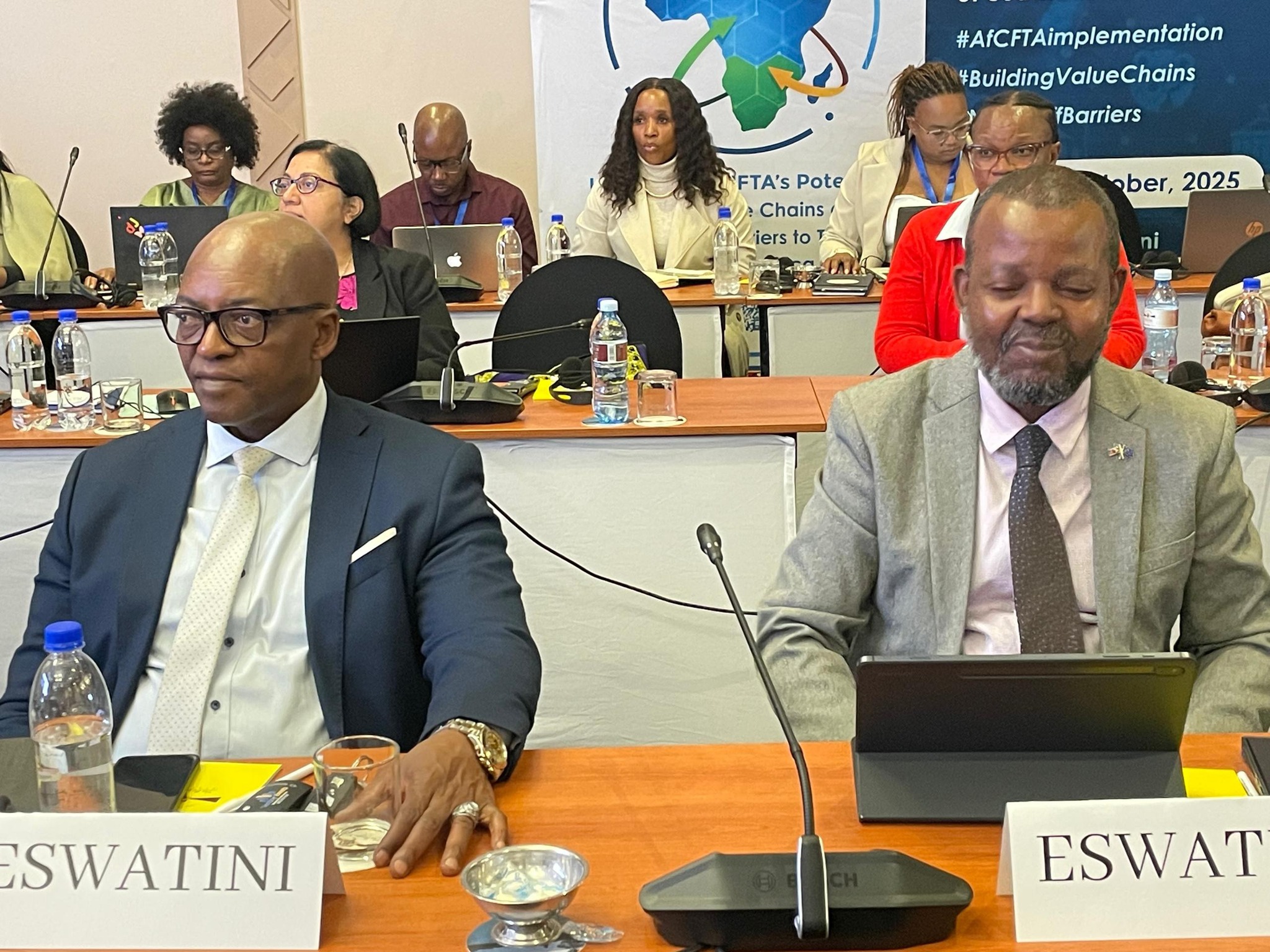 Business Eswatini CEO E Nathi Dlamini seated with MSMEs Director Mluleki Dlamini during the meeting.
By Delisa Magagula
Eswatini has been elected Chair of the Bureau of the Thirty-First Session of the Intergovernmental Committee of Senior Officials and Experts (ICSOE) for Southern Africa, with Malawi chosen as Vice-Chair and Lesotho serving as Rapporteur.
The announcement was made at the opening of the United Nations Economic Commission for Africa (UNECA) regional meeting, held in Ezulwini.
The committee brings together senior government officials, economists, and policy experts from Southern African countries to shape the region’s economic development agenda.
Eswatini’s election marks a key milestone in its growing role in regional policy coordination and economic integration efforts.
The ICSOE is responsible for guiding UNECA’s sub regional work programme, aligning it with the African Union’s Agenda 2063 and the implementation of the African Continental Free Trade Area (AfCFTA).
Speaking after the election, the Director for Micro, Small and Medium Enterprises (MSMEs) in the Ministry of Commerce, Industry and Trade, Mluleki Dlamini, expressed appreciation for the confidence shown by fellow member states.
“We accept this responsibility with humility and gratitude. Eswatini looks forward to working closely with Malawi, Lesotho, and all member states to strengthen regional cooperation and advance the economic transformation agenda for Southern Africa,” Dlamini said.
The new Bureau will oversee the Committee’s deliberations under the theme ‘Unlocking AfCFTA’s Potential: Building Value Chains and Overcoming Barriers to Trade in Southern Africa’
The session is focused on translating the AfCFTA framework into practical actions that enhance intra-African trade and industrial development.
As Chair, Eswatini will coordinate policy discussions on trade facilitation, regional value chain development, and financing industrial transformation.
The country is also expected to lead follow-up engagements between UNECA, SADC member states, and development partners on implementing key recommendations from the session.
Worth mentioning is that, Eswatini’s leadership comes at a time when the region is seeking to deepen economic integration, improve trade logistics, and reduce non-tariff barriers.
The Committee’s outcomes will directly influence national and regional strategies for harnessing AfCFTA opportunities.
A Delegate member from Botswana Ephraim Sizanyr said Eswatini’s chairmanship aligns with its broader commitment to regional cooperation.
The country is also currently serving as Chair of the African Union’s Specialized Technical Committee on Finance, Monetary Affairs, Economic Planning and Integration, under which it is championing initiatives to leverage government procurement for industrialization.
Dlamini said Eswatini’s focus during its tenure as ICSOE Chair would include advancing the participation of small and medium enterprises in regional value chains, supporting industrial linkages, and promoting inclusive trade.
“MSMEs are central to building Africa’s productive capacity. We want to ensure that smaller enterprises are part of the AfCFTA-driven value chain growth,” he said.
The meeting brought together representatives from 11 Southern African countries, development partners, and the United Nations Economic Commission for Africa. It will conclude with the adoption of key resolutions to guide economic policy coordination across the sub region.