
















Premier FMCG moves to acquire RFG Holdings
By Delisa Magagula
South African fast-moving consumer goods giant Premier FMCG (Pty) Ltd has made a firm offer to acquire all the issued shares of RFG Holdings Ltd, the parent company of Rhodes Food Group, in a deal that could reshape the region’s food manufacturing landscape.
The proposed acquisition, announced jointly by the two companies, is subject to shareholder and competition authority approval.
Under the terms of the offer, each RFG shareholder will receive one Premier share for every seven RFG shares held. The transaction values RFG at approximately R22.00 per share, based on Premier’s indicative valuation of R154.00 per share.
Once completed, RFG will be delisted from the Johannesburg Stock Exchange (JSE), and its shareholders will collectively own about 22.5 percent of the expanded Premier Group.
The companies say the combination will create one of the largest food and beverage manufacturing entities in southern Africa, with a combined annual revenue of nearly R28 billion.
Premier’s Group Strategy and Marketing Executive, Siobhan O’Sullivan, based in Johannesburg, is among the senior executives leading the transaction.
In a brief statement, she confirmed that the acquisition process is underway, pending regulatory approvals.
“This is an exciting strategic opportunity for both businesses. The proposal remains subject to shareholder and competition commission approval,” she said.
Inside RFG, senior management confirmed that the acquisition offer has been made and acknowledged that the company is waiting for the next stage of regulatory clearance.
One senior manager, who spoke on condition of anonymity because they are not authorised to comment publicly, said the deal was still in progress.
“There has been no formal handover or change in management. We are waiting for shareholder approval and for the competition authorities to complete their assessment. Until then, RFG continues to operate as an independent company,” said the senior staff.
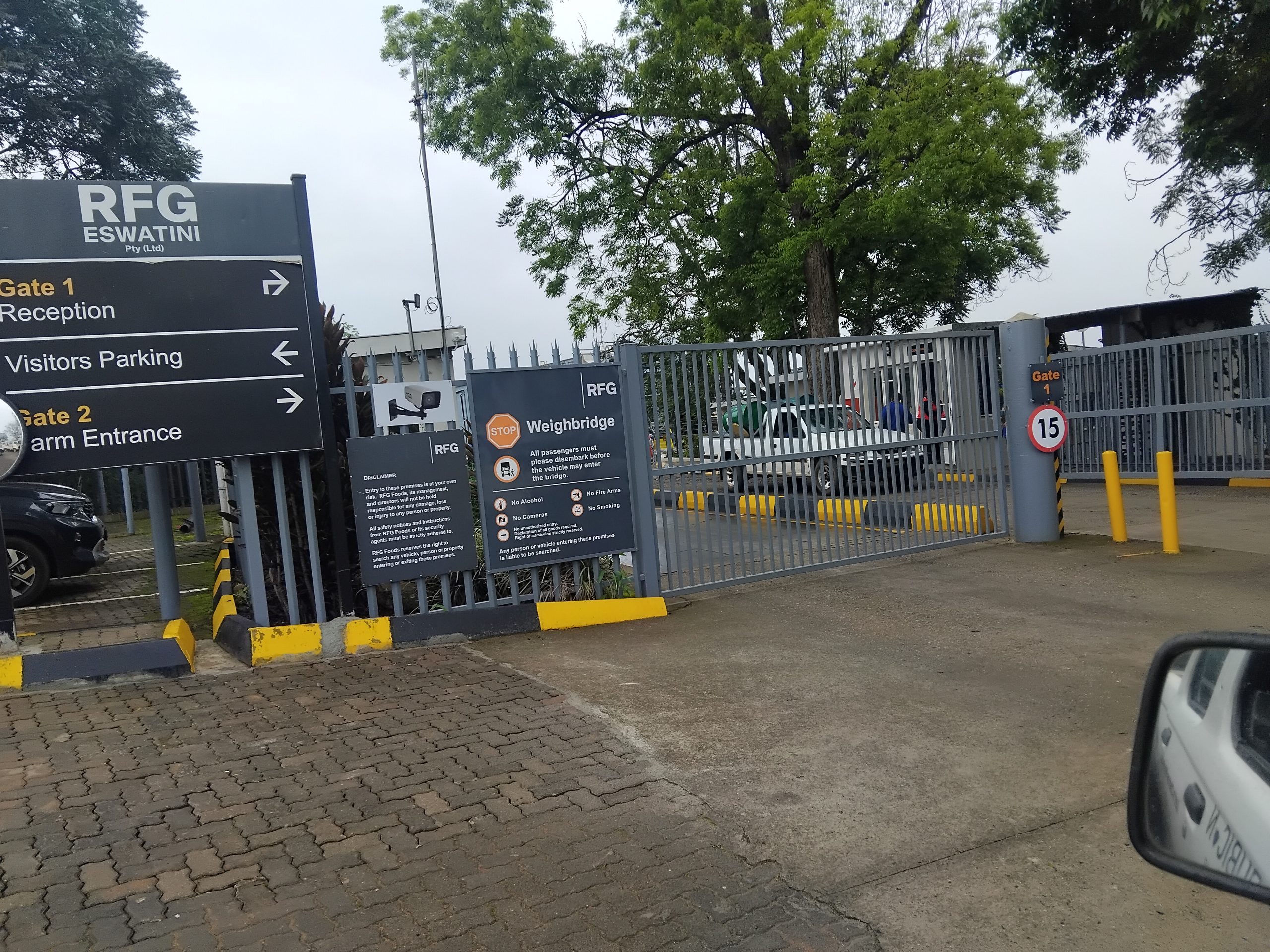
However, at RFG’s Malkerns operations in Eswatini, a different picture is emerging. Some employees say they have already begun noticing subtle shifts in internal communication and management oversight.
Junior workers who spoke to this publication expressed concern about the possibility of new management taking over before the end of the year.
One employee, who requested anonymity, said,to their understanding they are already under new management.
“We’ve been told that new management is already being introduced, and we don’t know if we’ll still have jobs come January. Everyone is worried about the December bonus and what’s going to happen to us next year,” said one of the staff members
Another worker said people are scared because there’s no clear information. They just hear that Premier has bought the company, but no one from management has explained what that means for them in Malkerns.
Senior executives at RFG disputed those claims, insisting that no change of control has occurred.
“It’s business as usual. We understand that people are anxious, but this process takes time. Nothing has changed internally until the regulatory bodies approve the transaction,” said one executive.
Worthnoting is that RFG has operated in Eswatini for decades, primarily through its fruit production and processing facilities in Malkerns, which supply pineapple and other tropical fruit to regional and international markets.
The company owns and operates two large farms covering more than 2,200 hectares and produces roughly 28,000 tonnes of pineapple each season. These operations are Rainforest Alliance certified, reflecting compliance with environmental and labour standards.
In 2024, RFG invested part of a R324 million capital programme in upgrading its Eswatini production facilities and expanding processing capacity.
The Malkerns operation employs hundreds of seasonal and permanent workers, making it one of the largest agricultural employers in the region.
Premier FMCG, meanwhile, already has a strong footprint in Eswatini through its milling and bakery operations in Matsapha, which produce popular brands such as Blue Ribbon, S.U.B., and Iwisa.
The company acquired Eswatini Bakery in 2012 and the Eswatini Mill in 2014, steadily building its local manufacturing base.
With both companies active in the country’s food manufacturing sector, the proposed merger would unite two of Eswatini’s key employers under one parent company.
Industry observers say the merger could have significant implications for workers, supply chains, and the local economy.
The proposed merger requires approval from both RFG shareholders and the Competition Commission of South Africa, as well as clearance from relevant authorities in Eswatini, where both companies have operations.
According to the joint statement released in October, shareholders holding 77.7 percent of RFG’s issued shares have already indicated support for the transaction.
If approved, RFG will be delisted from the JSE and integrated into Premier FMCG’s structure.
Premier has stated publicly that the merger will not lead to large-scale job losses, and that existing management at RFG will remain in place for “continuity and operational stability.”
Meanwhile Market analysts view the deal as part of a broader consolidation trend within the fast-moving consumer goods (FMCG) industry.
A Johannesburg-based food sector analyst, speaking to Eswatini Daily News said the merger could create a stronger, vertically integrated regional powerhouse.
“The two businesses are complementary. Premier dominates in baked goods and staples like maize and wheat, while RFG is strong in convenience and canned foods. Together, they could achieve significant economies of scale and operational synergies,” said the analyst.
He further said the success of such mergers often depends on how the companies manage cultural integration and workforce communication especially across borders like Eswatini.
However on the ground in Malkerns, uncertainty remains high. Workers say the lack of formal communication has fueled rumours that job cuts may follow the merger.
“It’s the silence that’s worrying. When management doesn’t tell us what’s happening, people assume the worst,” one employee said.
Some employees say they are especially concerned about the company’s December bonus payments, traditionally a key part of their annual income.
“If the new company takes over before Christmas, we don’t know if we’ll still get our bonus,” another worker said.
Labour representatives contacted for comment said they were monitoring the situation closely.
“We are aware of the proposed merger between Premier and RFG, and we are in communication with management to ensure that workers’ rights are protected,” said a representative.
“At this stage, there is no formal notice of retrenchment or change in employment terms, but we are demanding full transparency as the process unfolds,” said another representative from the Ministry of Labour and Social Security.
Meanwhile Economist Dr. Mbongeni Dlamini, based in Manzini, said such mergers often bring both opportunities and challenges for smaller economies like Eswatini’s.
“On one hand, an acquisition of this scale can strengthen investment and production capacity. But on the other hand, there’s always the risk of rationalisation companies combining departments or cutting duplicate functions,” he said.
In addition he said it’s important that the competition authorities look not only at market concentration but also at employment impact.
Worth noting, RFG’s management insists that there are no immediate changes to staff structures, operations, or management reporting lines.
The company’s internal communication to employees, notes that the acquisition is progressing through the necessary regulatory stages and that all employees will be kept informed as the process continues.
Despite that assurance, employees at the Malkerns plant say they will not relax until the matter is finalised.
Industry experts say that the ultimate impact of the deal will depend on how both companies manage their integration, especially in smaller markets like Eswatini.
“Workers need consistent communication. If handled carefully, the merger could create growth and secure jobs. But if communication fails, fear and misinformation could undermine morale and productivity,” said a regional business consultant familiar with both firms.
The proposed merger remains under review, and both companies have declined to comment further until the shareholder vote and competition approvals are complete.