
















WHO donates vehicles to boost palliative care services in Eswatini
By Siphesihle Dlamini
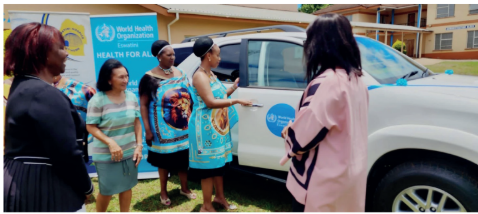
The World Health Organisation (WHO) has strengthened Eswatini’s palliative care services with the donation of two pre-owned vehicles to Hospice at Home and Hope House, two key organisations providing compassionate care to emaSwati living with life-limiting illnesses.
The handover ceremony, marked by a spirit of partnership and shared commitment, took place in the presence of dignitaries from the health sector and the royal family.
The donated vehicles were received on behalf of Hospice at Home by HRH Princess Temtsimba, standing in for the organisation’s patron, HRH Inkhosikati LaNgangaza, while Father Sandile Mswane accepted the keys for Hope House.
Ministry of Health Under Secretary Anthony Masilela also attended the event, underscoring the government’s support for palliative care initiatives.
In her remarks, Dr Susan Tembo, WHO Representative to Eswatini, emphasised that palliative care is an essential component of Universal Health Coverage, not merely an optional service.
She highlighted the critical role palliative care plays for patients with cancer, advanced HIV, heart disease, and other chronic conditions that require ongoing symptom management and psychosocial support.
“Palliative care must reach people where they are,” Dr Tembo stated. “Hospice at Home’s model depends on reliable transport to connect nurses and social workers with patients in their communities.
Without vehicles, vital visits can be missed, medicines delayed, and families left feeling abandoned when support is most needed. Transport challenges also restrict the expansion of services to new areas.”
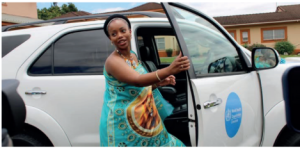
The donation of a vehicle to Hospice at Home, she explained, aims to ensure more consistent and safer access to patients across Eswatini. “Our intention is simple: to help you reach more patients, more consistently and more safely.”
Turning to Hope House, Dr Tembo described the vehicle as more than just a mode of transport. “We are supporting the ‘wheels of compassion’ that carry patients from hospital to hospice, from hospice back home, and often from despair to renewed hope.
We envision this vehicle helping to bring patients safely to and from Hope House so that distance is no longer a barrier.”
The WHO Representative concluded by underscoring the collaborative nature of health service delivery in Eswatini.
“WHO does not deliver services directly to communities but works through governments and partners like these two organisations symbolise the kind of partnership we need more of in Eswatini, government, faith-based organisations, communities, and international agencies each bringing their strengths so that no one is left behind.”
This donation arrives at a crucial time as Eswatini continues to enhance its health infrastructure and expand access to palliative care, a service increasingly recognised as vital to improving quality of life for patients with chronic and terminal illnesses.
By enabling Hospice at Home and Hope House to extend their reach, the WHO and Ministry of Health are helping to ensure that compassionate care is delivered where it matters most, at the patient’s bedside and within their community.
The vehicles will play a pivotal role in overcoming logistical barriers that have historically limited the scope of palliative care in Eswatini.
They will facilitate timely home visits, improve the delivery of medications and supplies, and provide safe transport for patients requiring hospice services, thereby strengthening the continuum of care.
This initiative exemplifies how strategic partnerships and targeted support can transform health outcomes by addressing practical challenges on the ground.