
















Inflation shows uneven impact across households
By Delisa Magagula
Eswatini’s inflation picture in October shows that while the overall rate remains relatively low, the impact on households is not uniform.
The latest Consumer Price Index (CPI) report released by the Central Statistical Office (CSO) under the Ministry of Economic Planning and Development shows distinct differences in how goods and services are priced across the economy, shaping how consumers experience the cost of living.
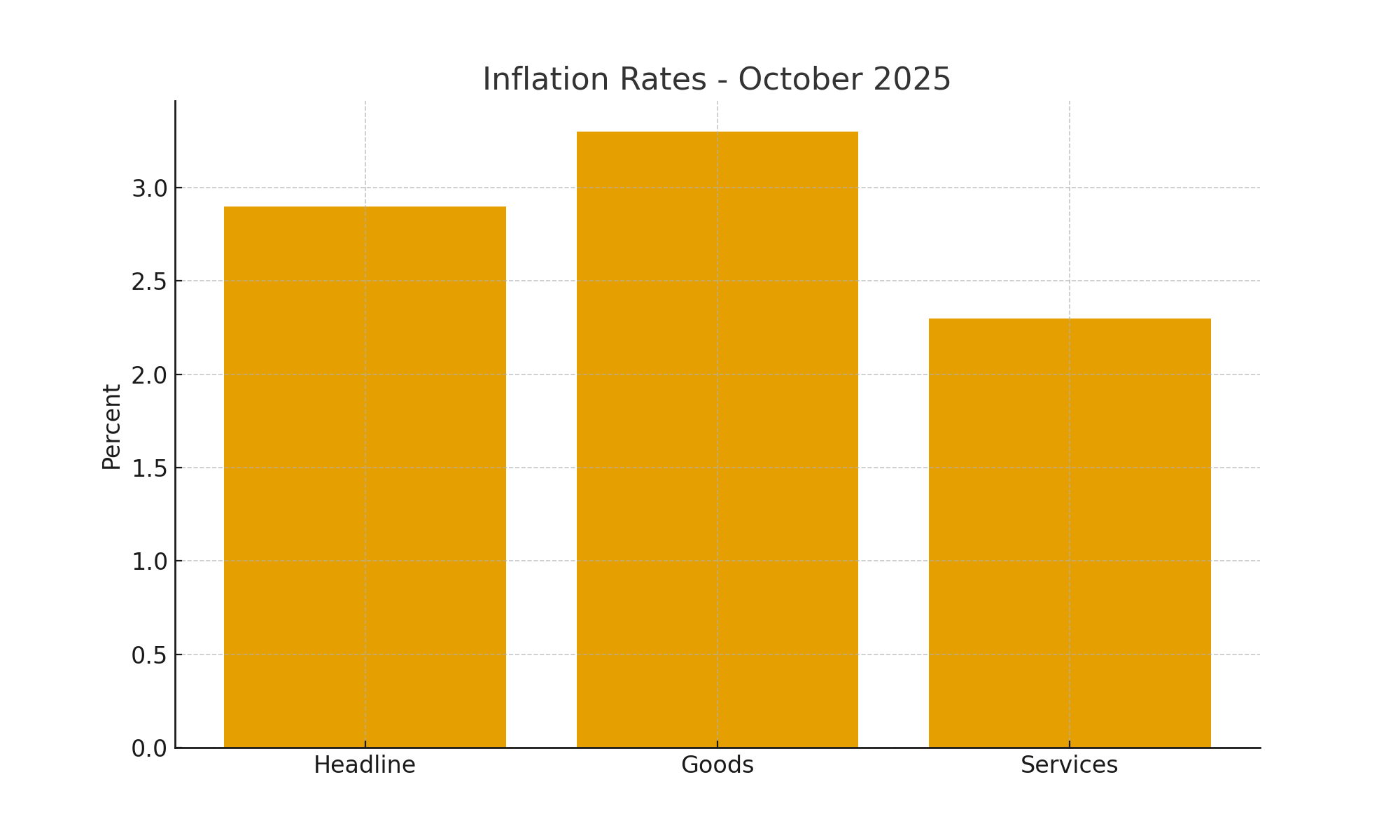
“Headline inflation stood at 2.9% in October 2025, slightly higher than the 2.8% recorded in September. The rate is still below the 3.3% recorded in October 2024, but behind the topline figure are contrasting trends between goods, services, and specific consumer categories,” reads the report in part.
The CPI report further shows that goods inflation was recorded at 3.3 per cent significantly higher than services inflation at 2.3 per cent. This gap illustrates a shift in price pressures that largely affect households depending on what they consume most.
According to the report goods such as food items, clothing, household products, alcohol, and other commodities tend to react faster to global and seasonal price changes. Services, on the other hand, such as accommodation, health care, and transport-related services, often adjust more gradually.
The report explains further that the widening gap means consumers who spend more on goods than services are experiencing a sharper rise in their living costs.
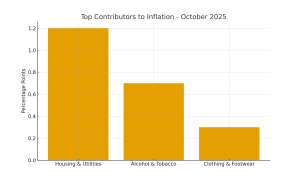
The single largest contributor to the 2.9 per cent inflation rate remains housing and utilities, accounting for 1.2 percentage points of the total. This category includes electricity, rent, water, and other household-related expenses. Its weight in the CPI means changes within this area heavily influence the overall rate.
The October figures suggest that the upward pressure from this category continues to shape household expenses, especially for families facing rising utility costs or landlords adjusting rental prices.
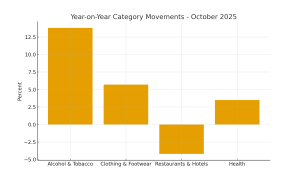
One of the most notable movements in the report is the sharp increase in alcoholic beverages, tobacco and narcotics, which rose 13.8 per cent year-on-year. This category contributed 0.7 percentage points to the headline rate, making it the second-largest driver of inflation in October.
The CSO notes that the increase is mainly due to higher prices for spirits and beer. While this does not affect all households equally, the rise has a clear impact on consumers who purchase these products regularly, as well as businesses in the hospitality sector.
“The clothing and footwear category increased by 5.7 per cent year-on-year, contributing 0.3 percentage points to overall inflation. This rise is notable heading into the festive season, when clothing sales typically increase and households begin preparing for year-end events and school-related purchases.
In contrast to the increases in other categories, the restaurants and hotels sector recorded a 4.2 per cent decline compared to the previous year. According to the CSO, the drop is tied to lower accommodation costs.
This decline suggests softer demand or price adjustments within the tourism and hospitality sector, which may reflect broader economic conditions affecting travel, leisure spending, or competition among accommodation providers.
The Health category recorded a 3.5 per cent increase, but the report highlights that the rise is slower than in previous periods. The moderation is attributed to a slower rise in the cost of medical services and medicines.
For households with ongoing medical needs, this slower increase provides some relief, although health-related expenses remain a significant and often unavoidable part of monthly budgets.
The month-to-month change in prices was +0.4 per cent, a clear shift from the 0.0 per cent movement recorded in September. This indicates fresh price adjustments heading into the final quarter of the year, often influenced by supply changes, seasonal demand, and broader economic activity.
While the overall inflation rate remains below 3 per cent, the distribution of price increases means households feel the impact differently.
Lower-income households, which allocate a larger share of their budgets to goods such as clothing, food, and alcohol, experience sharper inflation due to the higher goods inflation rate of 3.3 per cent
Middle-income households are more affected by utility and housing costs, given the strong influence of housing and utilities on the overall rate.
Consumers relying heavily on services such as accommodation or certain medical services may experience slightly slower cost increases because services inflation sits below goods inflation.
Worth mentioning these differing pressures paint a more detailed picture of the cost of living than the headline number alone. Meanwhile the upcoming CPI releases are slated for December 15, 2025 January 15, 2025 and February 16, 2026
The full October 2025 CPI report is available on the Ministry of Economic Planning and Development’s official website.