















Acting DPM calls for stronger protection of women, children in digital spaces
By Siphesihle Dlamini
Acting Deputy Prime Minister (ADPM) Sikhumbuzo Dlamini has issued an emphatic call to the nation to fortify Eswatini’s digital environment, urging communities, institutions, and policymakers to take decisive action against online abuse targeting women and children.
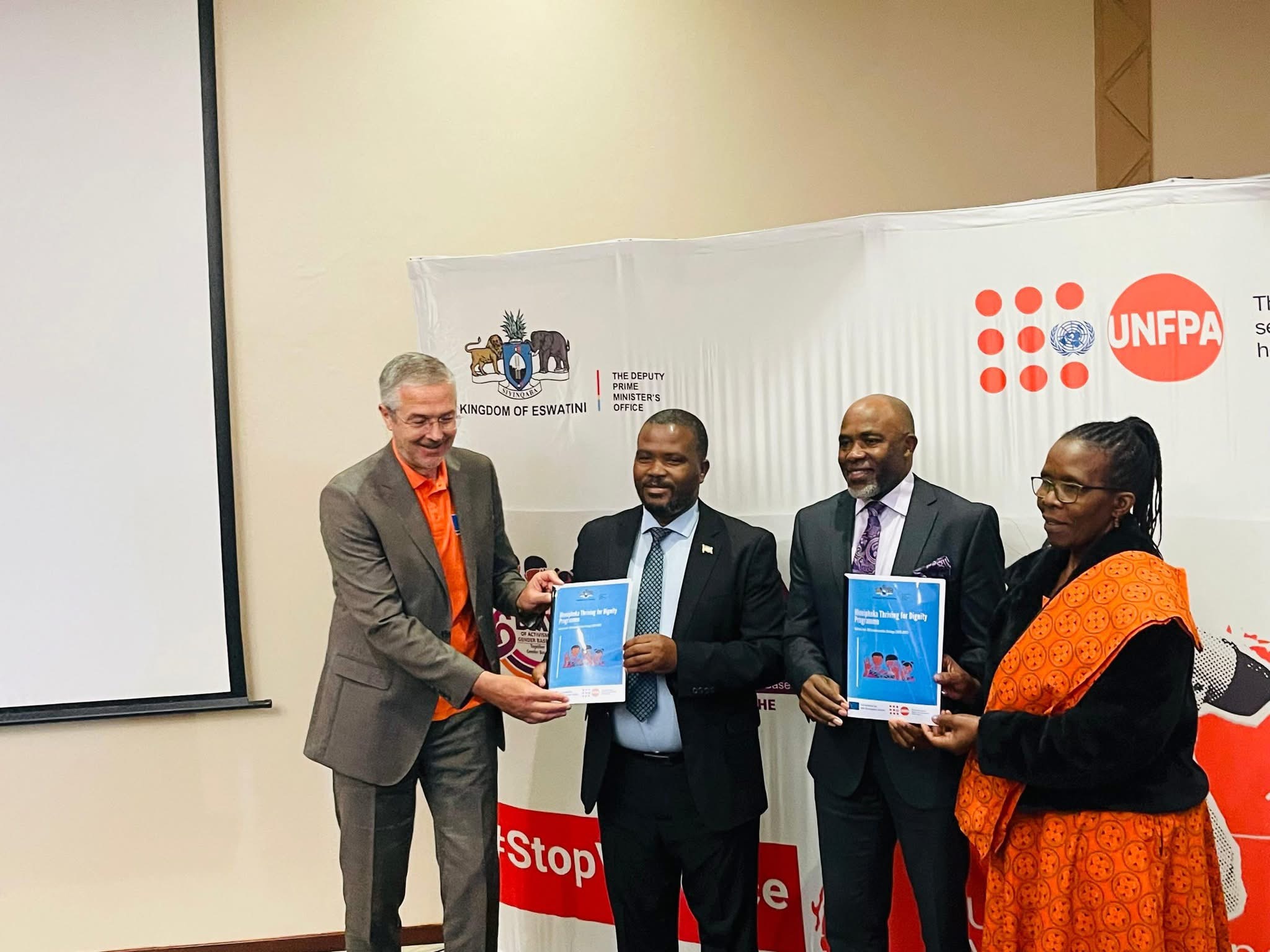
He made the remarks earlier today during the official launch of the 2025 edition of the 16 Days of Activism Against Gender-Based Violence, held at Royal Villas.
This year’s theme, “End Digital Violence Against All Women and Children,” signals a strong shift of focus toward the rapidly evolving landscape of abuse in the digital sphere.
In his keynote address, the ADPM emphasised that technology, while a powerful enabler of communication, education, and economic growth, has simultaneously created new frontiers where violence is perpetrated with increasing sophistication and anonymity.
“Let us acknowledge that as technology becomes embedded in daily life, it has opened new avenues for violence, including online abuse, cyberbullying, non-consensual sharing of intimate images, digital stalking, and harassment,” said Dlamini, noting that these forms of abuse often leave victims isolated, fearful, and psychologically traumatised.
He further stressed that combating digital violence must extend beyond awareness campaigns and should include strengthening national laws, ensuring that enforcement systems are fit for the digital age, and empowering survivors with accessible and safe avenues for reporting.
“The 16 Days of Activism remind us that ending violence is not the task of the government alone,” he said. “It requires the collective determination of every liSwati, every family, every community, every institution, and every partner.
Together, we can end digital violence. Together, we can end all forms of abuse. Together, we can build a safer Eswatini for this generation and the next.”
The ADPM anchored his message in sobering data drawn from the National Surveillance Survey on Violence, a key instrument in monitoring trends and informing national responses.
The statistics, he said, paint a troubling picture:
• In 2024, Eswatini documented 14,335 cases of violence across various categories.
• Between January and June 2025 alone, 8,859 cases have already been recorded.
These figures, Dlamini highlighted, demonstrate that traditional forms of abuse remain deeply entrenched in society, even as digital violence grows in scale and complexity.

The combination, he warned, creates a dual crisis that demands urgent and multifaceted intervention.
He reiterated the necessity of empowering survivors, stating, “Let us empower survivors with the knowledge, tools, and safe platforms to seek help without fear or judgment.”
The ADPM’s message further emphasised three core pillars for national response:
1. Education and Awareness
Communities, schools, families, and institutions must be equipped with information about online risks, safe digital practices, and early detection of cyber-based abuse. Digital literacy, he noted, should now be considered a fundamental life skill.
2. Legislation and Enforcement
In a world where digital crimes cross borders and often involve complex technological evidence, Eswatini must modernise regulatory frameworks to ensure perpetrators are held accountable. Strengthening forensic capabilities and enhancing collaboration between law enforcement and cyber experts were also identified as essential steps.
3. Survivor Support Systems
Safe reporting channels, psychosocial support, confidentiality guarantees, and survivor-centred digital platforms must be prioritised to encourage victims to come forward without fear of retaliation or stigma.
The launch was attended by a broad coalition of partners, reflecting the collaborative spirit required to confront gender-based violence in all its forms.
Present at the event were representatives from the European Union in Eswatini, the United Nations Population Fund (UNFPA) Eswatini, the United Nations Development Programme (UNDP) Eswatini, the Swaziland Action Group Against Abuse (SWAGAA), the SOS Children’s Villages Eswatini, along with several civil society organisations, community leaders, and advocacy groups.
Each year, from 25 November, the International Day for the Elimination of Violence against Women, to 10 December, Human Rights Day, the 16 Days of Activism against Gender-Based Violence unite people worldwide in a call for solidarity to end violence against women and girls everywhere.
Violence against women remains a critical public health and human rights crisis, affecting nearly one in three women at some point in their lives.
The risks are even greater in situations involving humanitarian emergencies, climate vulnerability, and poverty. Behind every number is a woman or girl whose health, safety, and fundamental rights have been severely violated.
Despite its prevalence, violence against women is preventable. Around the globe, communities are confronting harmful gender norms, governments are enhancing laws and policies, and health systems are expanding care and support services for survivors.
This year’s campaign spotlights the latest 2023 estimates on violence against women, released by the World Health Organisation (WHO) on behalf of the UN Violence Against Women Inter-Agency Working Group on Estimation and Data (VAW-IAWGED).
It also introduces the second edition of the RESPECT women prevention framework, launching on November 19.