















E851 mln SAPEMP MoU set to transform 19, 000 farmers sealed
By Kwanele Dhladhla
Eswatini Water and Agricultural Development Enterprise (EWADE) Chief Executive Officer Samson Sithole has declared that the Smallholder Agriculture Productivity Enhancement and Marketing Project (SAPEMP) is set to reshape the future of farming for thousands of households across the Kingdom of Eswatini.
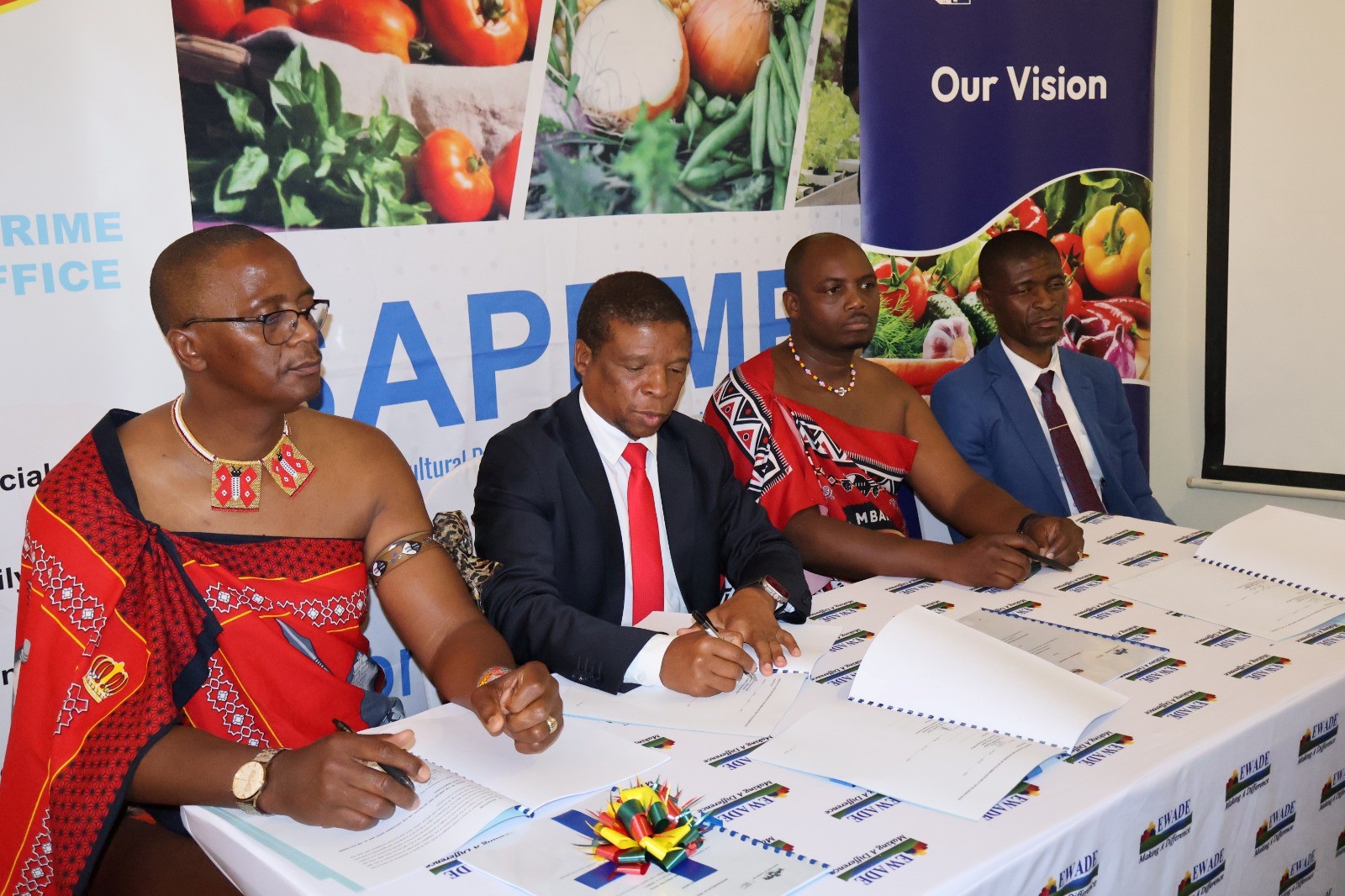
Sithole made the remarks on Tuesday during the signing of a Memorandum of Understanding (MoU) between EWADE and the National Agricultural Marketing Board (NAMBoard), which was represented by CEO Bhekizwe Maziya at the Mountain View Hotel.
The partnership, which is under the leadership of the Ministry of Agriculture and the Deputy Prime Minister’s Office, has been supported by the Government of Eswatini, the International Fund for Agricultural Development (IFAD), and the Green Climate Fund.
The $45 million (over E800 million) project aims to benefit more than 19,600 smallholder households and an estimated 117,700 people across all four regions of the country.
Sithole explained that EWADE, as the implementing agency, spearheads SAPEMP with a multi-pronged approach. He explained that farmers would be organised into clusters to strengthen collective capacity, while multi-purpose collection centres would be rehabilitated and constructed to support aggregation, grading, and storage facilities.
The CEO further highlighted that farmers would be integrated into the Agricultural Integrated Information System (AIIS), a digital platform that provides real-time access to market intelligence, pricing trends, and extension support.
“Through contracts facilitated with NAMBoard, smallholder farmers will have secure markets for their produce, enabling them to transition into commercial farming.
This project is not just about improving production; it is about building resilience, raising incomes, and transforming communities,” Sithole said.
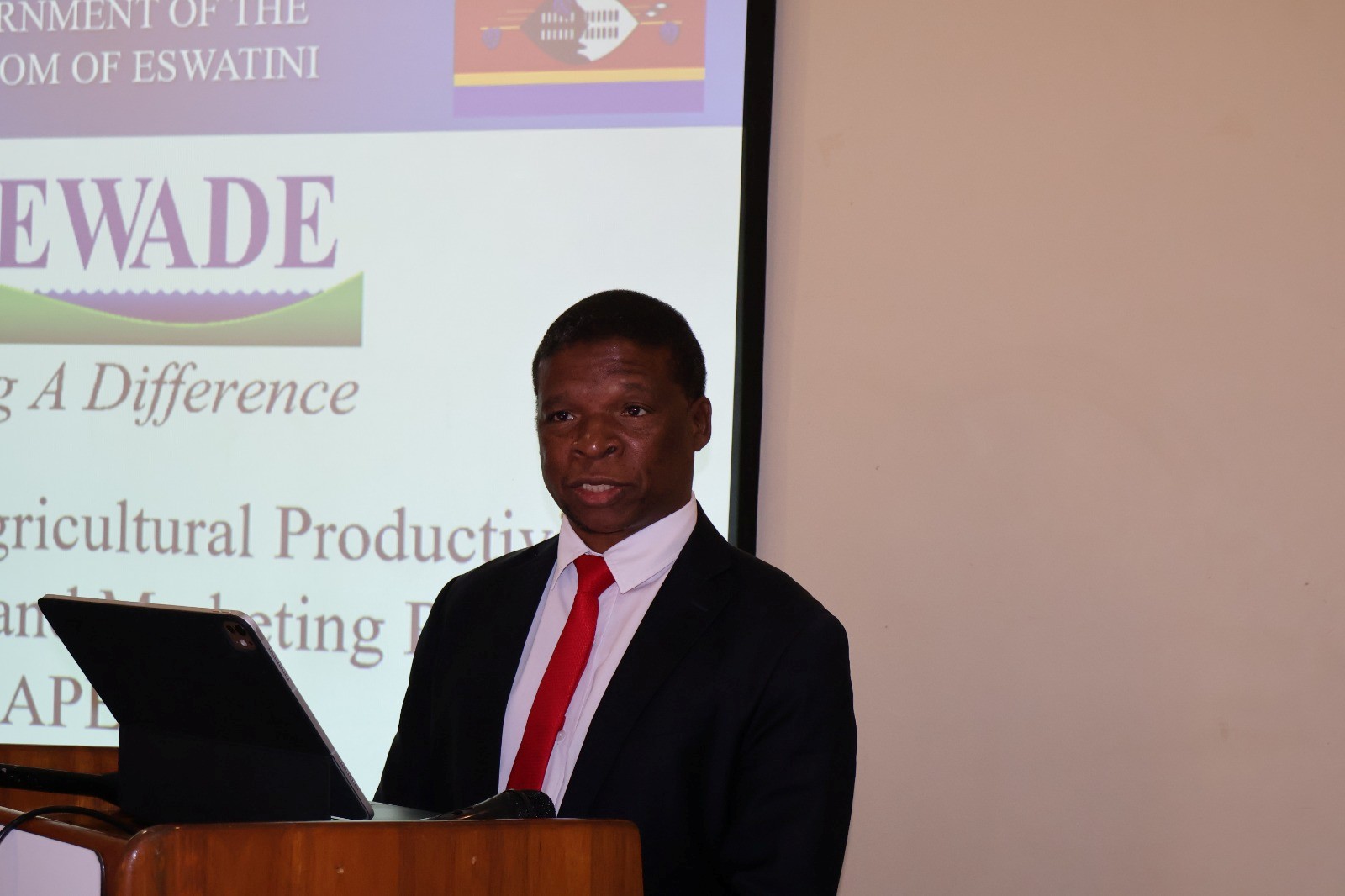
The CEO emphasised that collaboration was the backbone of SAPEMP’s success.
“No institution can achieve transformation alone. The future of agriculture lies in shared resources, coordinated action, and collective accountability,” he said.
He stressed that by joining forces with NAMBoard, the Ministry of Agriculture, the Deputy Prime Minister’s Office, and international partners, EWADE was helping to create a holistic ecosystem that supports farmers from production to market.
EWADE reaffirmed its commitment to transparency, innovation, and inclusivity in implementing SAPEMP. He pointed out that special attention had been placed on empowering women and youth, with tailored interventions also ensuring persons living with disabilities were not left behind.
“Women’s empowerment lies at the very core of this programme, ensuring active participation in agribusiness and financial decision-making.
Equally, young people will benefit from job opportunities and agribusiness training to prepare them as the next generation of farmers,” Sithole explained.
Francesco Rispoli of IFAD described the MoU as a powerful demonstration of joint commitment to climate-smart agriculture and rural transformation.
“This agreement symbolises our collective determination to scale up sustainable land management and open new pathways for smallholder farmers to thrive.
A key innovation in SAPEMP is its support to structure win-win business relationships between smallholder clusters and anchor enterprises, ensuring that farmers are not only producing more but also earning more,” Rispoli said.
He added that IFAD, along with its partners, was committed to ensuring that the availability of funds would not delay implementation or disrupt progress.
“Together, we will ensure that SAPEMP delivers tangible impact and contributes to a stronger, food-secure, and more resilient Kingdom of Eswatini.”