
















Eswatini deploys cops in Somalia
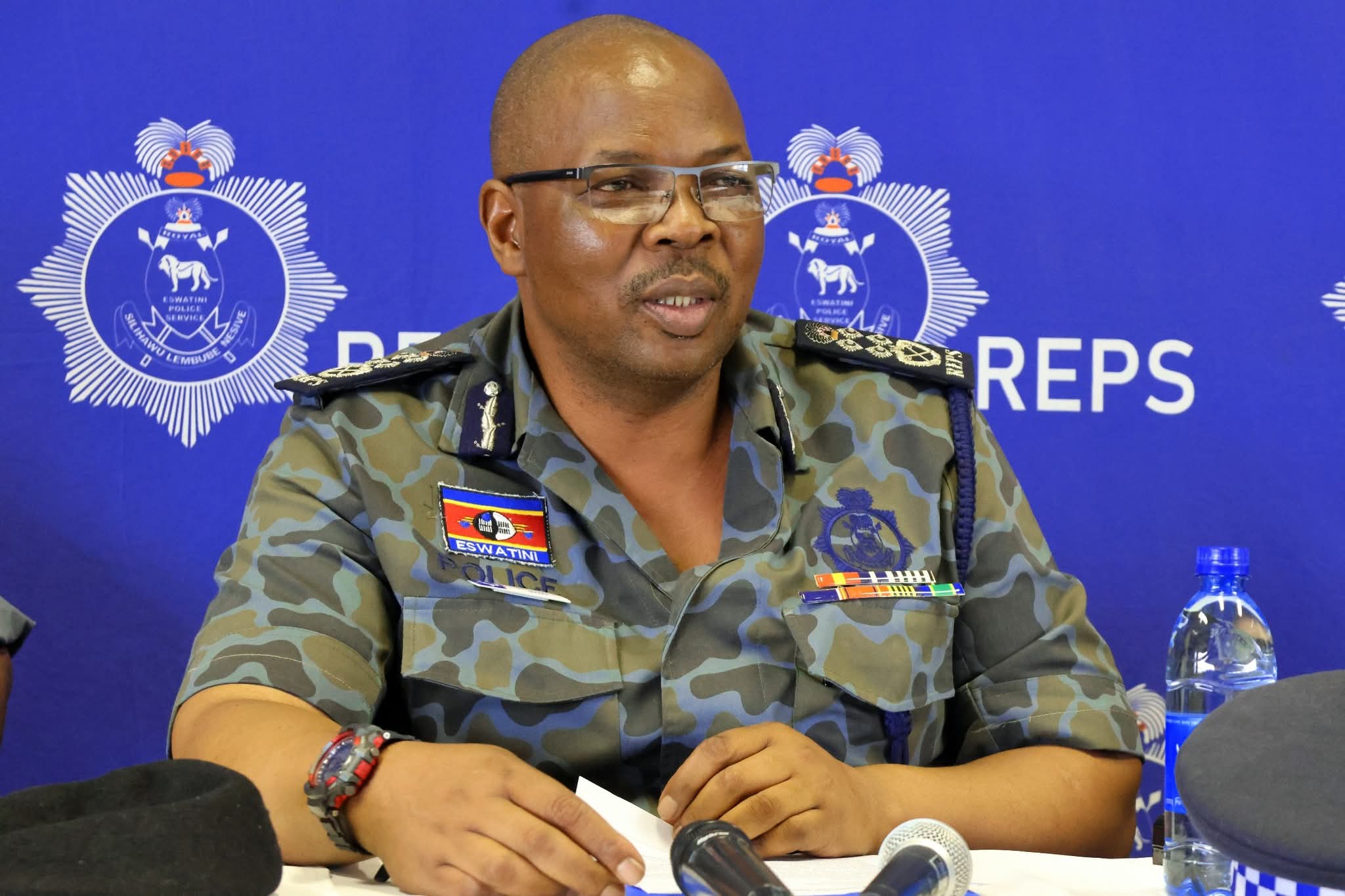 NatCom Vusie Manoma Masango.
By Thokozani Mazibuko
The National Commissioner of Police, Manoma Vusie Masango, has called on 32 Individual Police Officers (IPOs) from the Royal Eswatini Police Service (REPS) to embody discipline, honour, and respect for human rights as they prepare to join the African Union Support and Stabilization Mission (AUSSOM) in Mogadishu, Somalia.
Speaking during the official closure of the Police Pre-Deployment Training (PPDT) course at the Operational Support Services Unit (OSSU) in Ngonini, NatCom Masango reminded the officers that their role is not only to represent Eswatini but also to safeguard civilians and uphold international law in a conflict-torn region.
“You have reflected an earnest intention on the commitment of member states to the contribution of peace and security in the continent,” Masango said.
“Go with purpose, humility, and the unwavering determination to serve the African people. Your safety, conduct, and discipline will remain our highest priority and concern.”
Masango emphasized the importance of adhering to International Humanitarian Law (IHL) and International Human Rights Law (IHRL) while on mission, stressing that the officers must protect civilians and respect the Rule of Law (RoL) in line with the principles of African Union Peace Support Operations (PSOs).
The pre-deployment training, which concluded this week, equipped the officers with the necessary skills and knowledge to serve effectively in Somalia.
RELATED: Fraud Syndicates Tighten Grip on Eswatini’s Elderly
The programme covered operational readiness, international regulatory frameworks, cultural sensitivity, and mission-specific challenges.
The deployment of Eswatini police officers to Somalia is part of the Kingdom’s broader commitment to continental peace and security under the African Union (AU).
The officers will be joining other peacekeepers from across Africa in Mogadishu, where AUSSOM continues its mandate of supporting stabilization efforts, strengthening local institutions, and protecting civilians amid ongoing insecurity.
Somalia has endured decades of instability marked by armed conflict, insurgency, and humanitarian crises. International peace support operations, including AUSSOM, play a critical role in stabilizing the country while supporting Somali authorities in restoring law and order.
Eswatini’s contribution reflects the country’s ongoing dedication to regional solidarity and the AU’s vision of “Silencing the Guns” on the continent.
As the officers prepare to depart, NatCom Masango’s message showed not only the importance of professional conduct and discipline but also the moral responsibility of representing Eswatini with integrity and respect on the global stage.
Why Somalia still needs peacekeeping?
A Look at the ongoing crisis
Decades after the collapse of its central government in 1991, Somalia remains one of Africa’s most fragile states.
The persistent conflict, terrorism, humanitarian crises, and fragile political structures have made peacekeeping not only necessary but vital to the survival and stability of the Horn of Africa nation.
The African Union Support and Stabilization Mission in Somalia (AUSSOM), which succeeded the African Union Mission in Somalia (AMISOM) in 2022, continues to play a critical role in supporting peace and security. Its mandate is clear: protect civilians, strengthen Somali security institutions, and stabilize areas liberated from armed groups.
The Al-Shabaab threat
One of the biggest reasons Somalia still requires peacekeeping is the ongoing threat of Al-Shabaab, the Islamist militant group linked to al-Qaeda.
The group has waged a deadly insurgency for over 15 years, carrying out bombings, assassinations, and armed assaults not only in Somalia but also across the border in Kenya and beyond.
Despite significant gains by Somali security forces and international partners, Al-Shabaab remains resilient, controlling parts of rural Somalia and using guerrilla tactics to destabilize government-controlled areas.
RELATED: Phase II salary adjustments set to cost the Government E230 mln annually
Peacekeepers are needed to provide the Somali National Army with backup support, intelligence, and training in counter-insurgency.
Weak governance and political fragility
Somalia has made progress in establishing a federal government, but deep divisions among political actors, clan rivalries, and corruption undermine the stability of institutions.
Elections are often delayed, and disputes over power-sharing between the federal government and regional states fuel tensions.
Peacekeeping forces help prevent these tensions from spiralling into violent conflict by ensuring security during political processes and maintaining a neutral presence while Somali leaders negotiate their differences.
Humanitarian crisis
The country continues to face one of the world’s worst humanitarian emergencies. According to the United Nations Office for the Coordination of Humanitarian Affairs (OCHA), over 6.9 million Somalis currently need humanitarian assistance due to conflict, drought, and food insecurity.
Peacekeepers play a critical role in securing humanitarian corridors, enabling aid agencies to reach vulnerable populations. Without them, humanitarian workers would face heightened risks, and many communities would remain cut off from lifesaving support.
Regional and Global security concerns
Somalia’s instability does not only affect its own citizens. The region is strategically located along the Gulf of Aden and the Indian Ocean – one of the busiest shipping routes in the world.
Piracy, terrorism, and arms trafficking from Somalia pose threats to international security and trade.
Peacekeeping missions in Somalia, therefore, have a dual purpose: supporting Somali sovereignty while also protecting regional and global interests.
The African Union and its international partners, including the United Nations and the European Union, have repeatedly stressed that instability in Somalia is a continental concern.
The road ahead
Somalia’s long-term stability depends on strengthening its own national security forces and institutions. Peacekeepers are not a permanent solution, but they provide the breathing space needed for the Somali government to build capacity.
The African Union has committed to a gradual transfer of security responsibilities to Somali authorities, with the ultimate goal of allowing Somalia to take full ownership of its peace and security. Until that time comes, however, peacekeeping remains a necessity.
As Eswatini and other African countries prepare to deploy officers under AUSSOM, their mission is not just about protecting Somalia – it is about safeguarding Africa’s collective security and reaffirming the continent’s commitment to peace.