
















Government spends over E450 mln on school infrastructure development
By Thokozani Mazibuko
Director of the Microprojects Programme, Sibusiso Mbingo, has revealed that the government has already invested over E450 million towards the construction and rehabilitation of classrooms across the kingdom.
He explained that the massive investment was channeled through the Microprojects Programme, a government initiative tasked with upgrading educational facilities to ensure conducive learning environments for pupils.
“Already, 350 school structures have been completed out of the 427 schools that are earmarked to benefit from the E450 million allocation,” Mbingo disclosed.
He further noted that the programme has not only constructed new classrooms but also reconstructed several that were destroyed by violent storms in previous years.
RELATED: WATER INVESTMENT PROJECTS NOW A FINANCING PRIORITY
According to Mbingo, the initiative demonstrates the government’s commitment to addressing infrastructure challenges in the education sector and ensuring that no child is left behind due to a lack of proper facilities.
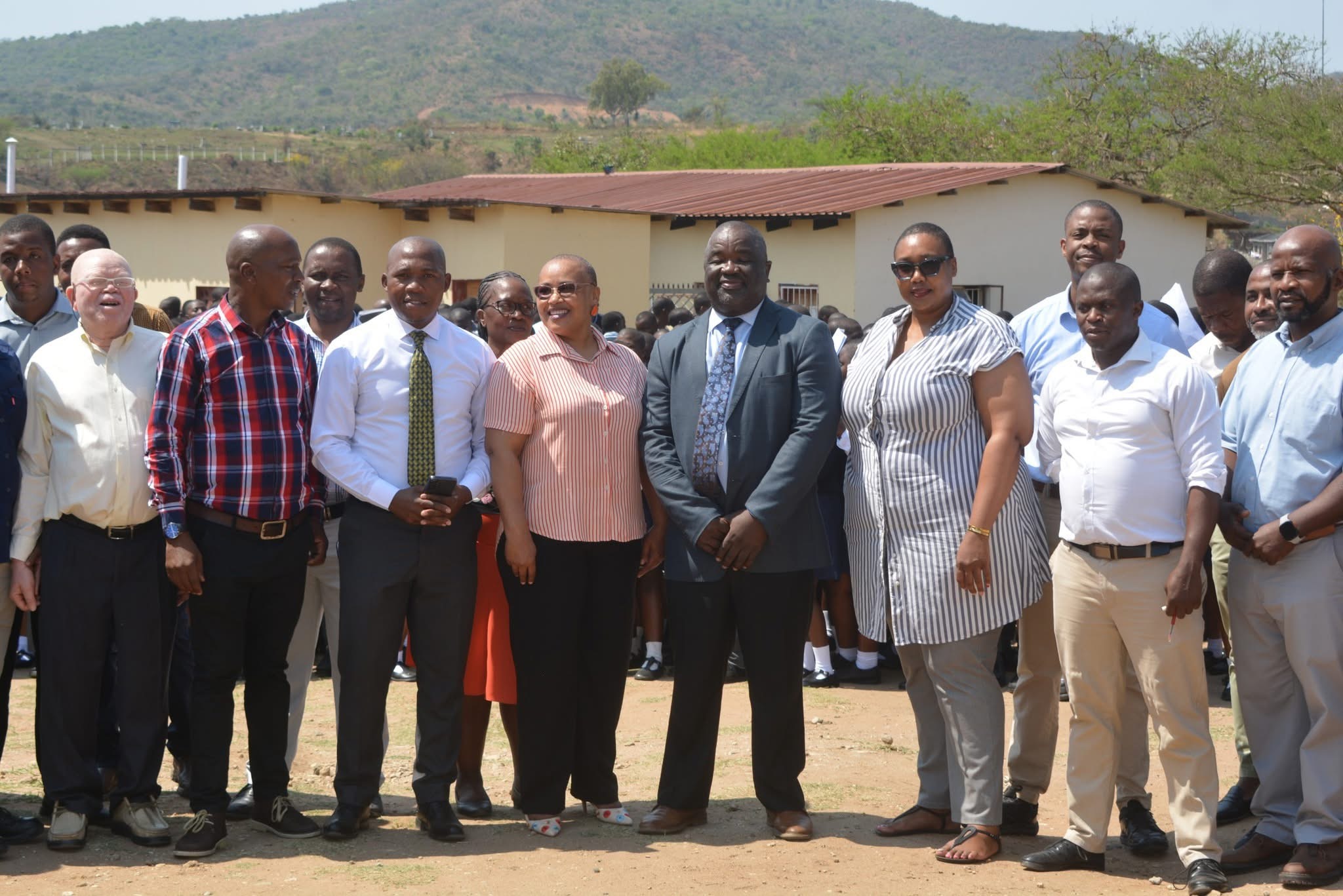
Minister of Education and Training, Owen Nxumalo, who addressed pupils at Ngwane Park High School, encouraged them to take full advantage of the improved learning conditions and remain focused on their studies.
He urged learners to pursue excellence, reminding them that education remains the most powerful tool for shaping their future and contributing positively to national development.
Teachers who attended the event applauded the government’s investment, noting that improved classrooms significantly enhance both teaching and learning.
RELATED: Pigg’s Peak needs E31 million to complete ongoing projects
It is worth mentioning that the Microprojects Programme has long been at the forefront of development projects in Eswatini, ranging from school infrastructure to community-based initiatives.
The current rollout is one of the largest in recen years, reflecting the government’s recognition that quality education begins with safe and well-equipped learning spaces.
It should be noted that as the programme continues to complete the remaining schools, communities across the country are expected to benefit, particularly in rural areas where the need for decent infrastructure has been most urgent.