















PM urges permanent home for accountants’ regulator as trust takes centre stage

By Delisa Magagula
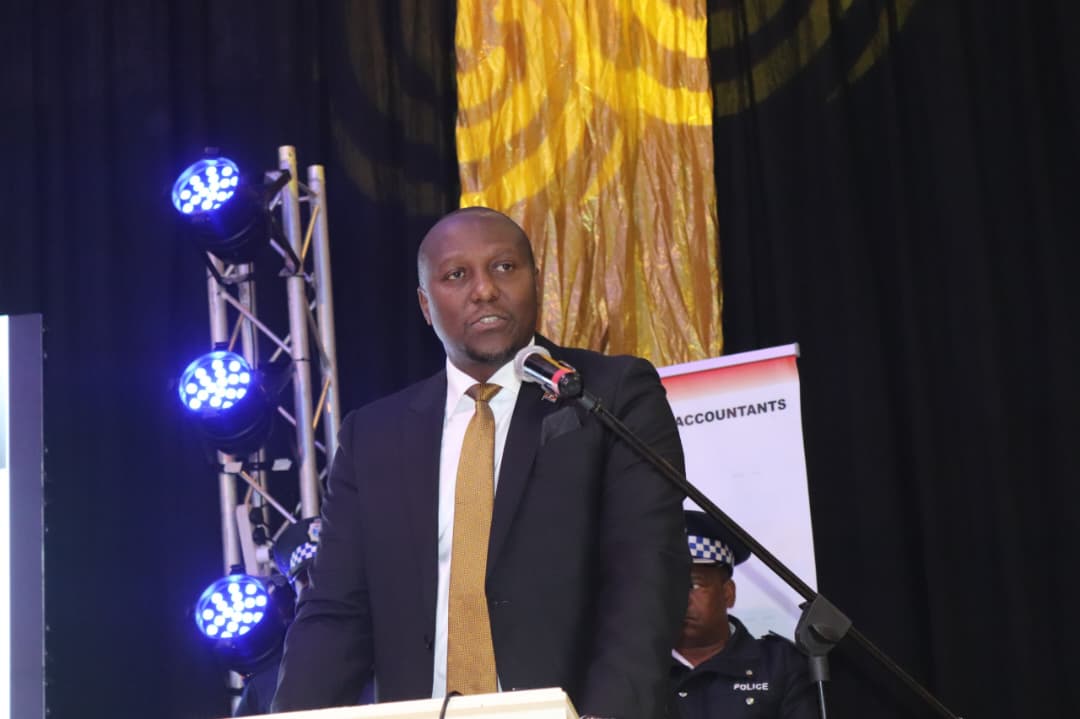
The Prime Minister of Eswatini, Russell Mmiso Dlamini, has urged the Eswatini Institute of Accountants (ESIA) to secure land and build its own permanent headquarters, saying the body must reflect the weight of its mandate as the country’s regulator of accountants and auditors.
Speaking at the Institute’s Annual Dinner and Graduation at Esibayeni Lodge on Thursday evening, the Prime Minister told an audience of ministers, judges, industry leaders and graduates that the time had come for ESIA to establish a home that symbolises its national importance.
“A permanent home for the Institute will not only symbolise its enduring mandate, but also reinforce its capacity to serve the nation with distinction,” Dlamini said, pledging government support to help bring the vision to life.
The event, held under the theme “Bridging the Trust Deficit: The Role of Leaders in Rebuilding Public Confidence”, drew together leaders from the public and private sector at a time when institutions worldwide are struggling to regain public trust.
Dlamini reminded the profession that their work underpins transparency and accountability across society.
“Trust is not a given; it must be earned, nurtured, and protected,” he said. “In an era where confidence in institutions is fragile, your profession must stand as a beacon of reliability.”

He stressed that lapses in financial accountability or ethics do more than tarnish balance sheets, they erode the social fabric. “Accountants and auditors must lead by example, embedding integrity in every transaction and every system they touch,” he urged.
The Prime Minister also appealed to practitioners to register with ESIA, saying membership under a recognised regulator enhances professional credibility and demonstrates a commitment to ethical practice. “Belonging to ESIA ensures you are part of a global community committed to the highest standards of ethics and competence,” he said.
Turning to graduates, Dlamini congratulated them on their achievements but reminded them that the ceremony was not the end but the beginning of their professional journey.
“You are stepping into a profession that is central to building trust in our economy and society,” he said. “Wear your success with pride, but shoulder the responsibility of leadership with humility, dedication and integrity.”
The evening’s keynote address was delivered by retired South African Chief Justice Mogoeng Mogoeng, whose message resonated deeply with the gathering. Speaking candidly about ethical leadership, he told graduates that integrity was not negotiable.
“My soul is not for sale,” he said. “Ethical leadership boils down to an irrevocable commitment to not auction your soul off to the highest bidder in exchange for money, power, praise, or fame.”
Mogoeng drew on both his judicial experience and personal reflections, stressing that leadership is about conduct, not titles. “Leadership is not a role one plays, it is a life one leads,” he said.
He quoted leadership thinker Fred Smith Sr., who described self-respect as an “inner voice that speaks honestly and directly.” Mogoeng explained:
“When I wake up at 3 o’clock in the morning, I talk to the little guy inside of me who is still simple, honest, and knows right from wrong. When we can talk freely, I know I respect who I am. When he turns away, I know I am in trouble.”
For accountants and auditors, Mogoeng warned, the stakes are especially high. “Every financial statement you sign, every account you audit, is a judgment on truth and fairness. Compromise that, and you compromise the nation.”
Both the Prime Minister and the former Chief Justice underlined that the erosion of trust is not unique to Eswatini. Across the world, citizens are questioning the integrity of governments, corporations and regulators.
Dlamini warned that this deficit in confidence threatens economic stability and social cohesion. “Rebuilding trust will demand not words alone, but actions that demonstrate competence, transparency, and a commitment to the public good,” he said.
Mogoeng echoed the point, challenging professionals to live the values they espouse. “To bridge the trust deficit, we must be the change we wish to see. That means acting with integrity even when it is costly, and telling the truth even when it is uncomfortable,” he said.
As the evening drew to a close, both leaders left graduates and professionals with a clear message: trust is the ultimate currency of leadership, and accountants are its custodians.
For ESIA, the push for a permanent headquarters now stands as both a practical goal and a powerful symbol of stability, credibility, and a profession that anchors public confidence.
“Bridging the trust deficit is not the work of one institution or one profession,” Dlamini concluded. “It is a collective endeavour that requires us all, government, regulators, professionals and citizens, to restore faith in our systems and in each other.”