















Trump Draws a Line: Zelensky and Europe Face Stark Choice—Accept Peace Terms or Stand Alone
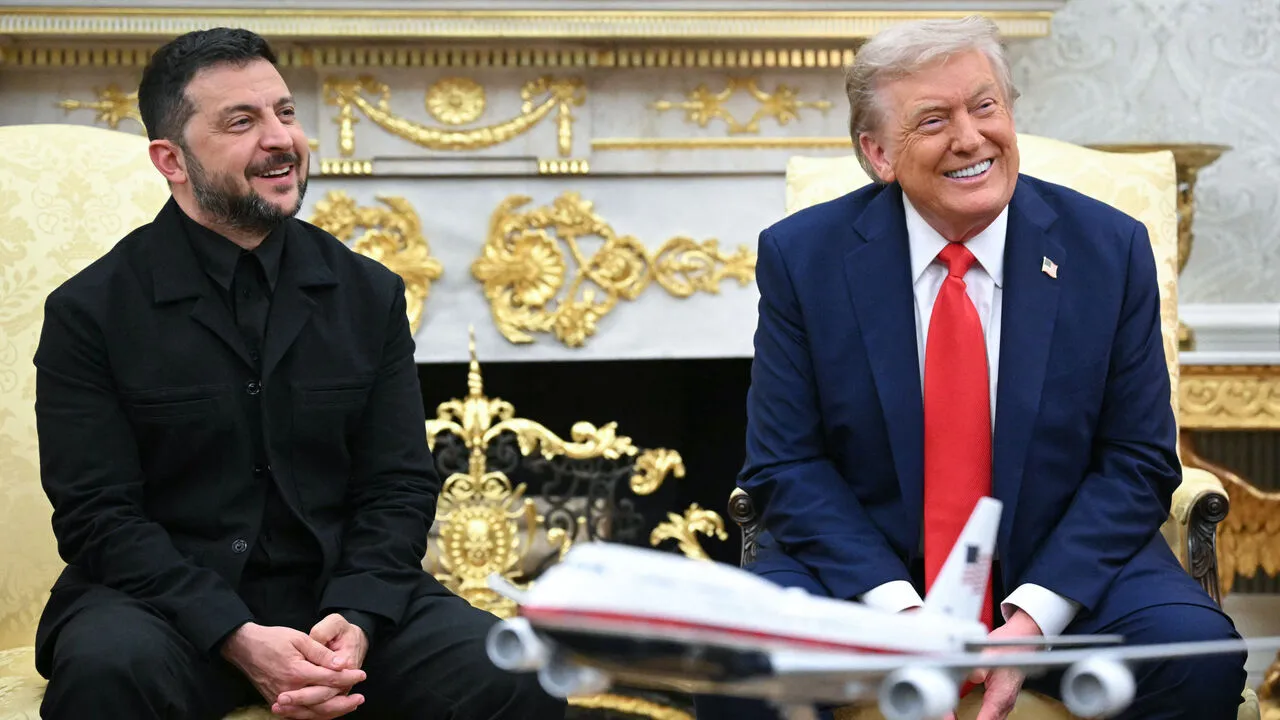
In a move that could redefine the balance of power in Europe and reshape the future of Ukraine’s war with Russia, U.S. President Donald Trump has delivered a clear message to Kyiv and America’s NATO allies: accept the peace plan negotiated with Russia, or prepare to fight without Washington’s backing.
The 28-point proposal—drafted over recent weeks by American and Russian envoys—was formally presented to Ukraine with both urgency and a warning. Ukrainian President Volodymyr Zelensky has been given a short window to decide whether to sign or risk losing vital military, intelligence, diplomatic and financial support from the United States.
Trump himself made the stakes unmistakable. Speaking Friday, the U.S. president said Zelensky would “have to like” the plan, adding that although the document could still be refined, the basic offer was not open to prolonged bargaining. If Ukraine rejected it, he said, Zelensky could “continue to fight his little heart out.”
For Ukraine—a country battered by invasion, political scandal and dwindling resources—the message landed like a punch. Zelensky, in a grim national broadcast Friday night, framed the choice as nothing short of existential: either risk the collapse of its relationship with its most powerful ally, or accept conditions that heavily favor Russia’s negotiating positions.
If Washington were to step back, Kyiv would face immediate and profound consequences. The loss of U.S.-supplied weapons and battlefield intelligence, combined with domestic exhaustion, manpower shortages, financial strain and weakening public confidence, could erode Ukraine’s ability to hold the line. And beyond Ukraine’s borders, the decision could send shockwaves through Europe, calling into question long-term U.S. security commitments that have underpinned NATO stability for decades.
A New Reality for Europe and Ukraine
At the center of the debate lies a deeper strategic message: if Ukraine refuses the terms, the United States may withdraw entirely—leaving not only Kyiv but also Western Europe to confront Moscow without American firepower, logistics, cyber capabilities, or political cover.
For NATO nations—especially frontline Eastern European states—such a shift would be historic. A signal that the United States, having served as the central military guarantor of Europe since World War II, was willing to step back and let European nations defend the continent largely alone.
Shifting Weapons Pipelines
Three years ago, the loss of U.S. weapons would have devastated Ukraine’s war effort. Today, the impact would still be severe—but the battlefield has changed.
European nations have now surpassed the United States in total military financing since the start of the war. Across the EU, at least $40 billion in defense aid has been allocated, compared to roughly $35 billion from the U.S. over the same period.
Ukraine is also less reliant on tanks, armored vehicles and infantry support than it was during the early months of Russia’s invasion. Warfare has entered a new stage dominated by drones, electronic warfare and precision long-range strikes.
Even so, Washington remains the supplier of some of the most critical battlefield assets—particularly air defense systems. Ukraine’s Patriot missile batteries, in short supply and difficult to replace, have been crucial in blocking Russia’s intensified missile strikes on major cities and infrastructure. Without ongoing U.S. maintenance support and continued missile shipments, Kyiv’s air shield could begin to thin.
While some European nations could continue to resupply Ukraine with air defense support, their own stockpiles are limited, and manufacturing capacity will require time to scale.
Trump’s administration has also been willing to sell weapons to the $90 billion Europe-funded PURL procurement program. If that channel were shut down as punishment for rejecting the peace deal, Ukraine could lose access to advanced systems even if Europe continued paying for them.
There is one bright spot: Ukraine has rapidly developed its own drone and missile production capacity, with officials saying up to 90% of drones used on the battlefield are domestically produced. Still, scaling from thousands to tens of thousands requires time, raw materials and industrial security—resources that depend heavily on Western support.
The Intelligence Factor: The Critical Advantage at Risk
Weapons are only part of the equation—intelligence is the force multiplier that has allowed Ukraine to strike deep inside Russian territory and anticipate air and missile attacks before thousands of civilians could be harmed.
The U.S. briefly halted certain types of intelligence sharing in March after a tense Oval Office confrontation between Trump and Zelensky. Although the details of the pause were never fully disclosed, sources familiar with the matter believe the U.S. provides:
-
early warning of missile launches
-
satellite and signals intelligence tracking Russian troop movements
-
targeting data supporting long-range strikes inside Russia
Zelensky has acknowledged that systems such as Patriot, NASAMS and IRIS-T would lose their effectiveness without U.S.-generated tracking data. European nations are building their own intelligence-sharing networks, but experts say developing such sophisticated and integrated systems will take years—not months.
Ukraine’s Internal Challenge: Soldiers and Strain
Even with continued Western support, Kyiv is facing deep internal challenges. The Ukrainian military is suffering a severe manpower shortage. Tens of thousands of soldiers have deserted or failed to report for duty this year alone, with front-line units entrenched in constant brutal combat.
No amount of advanced weaponry can compensate for shrinking troop numbers, and the Ukrainian government has struggled to impose effective mobilization without triggering further public backlash.
The country is also under heavy economic strain. War financing is dependent on Western assistance, and a U.S. withdrawal could force Ukraine into unprecedented budgetary crisis.
Security Guarantees: A Promise Without Details
The U.S.–Russian proposal includes a vague promise that Ukraine will receive “reliable security guarantees.” Kyiv has little reason to feel reassured. Another clause states that “Russia is expected not to invade neighboring countries,” language that falls far short of binding assurance and offers no enforcement framework.
According to leaks, an annex to the draft agreement suggests that any major renewed Russian offensive across the new demarcation line would be considered a threat to the “peace and security of the transatlantic community.” Even so, the proposal does not explicitly guarantee automatic U.S. military response, leaving Kyiv deeply unsure of how reliable such protections would prove if Russia tested the limits.
A Decision With Global Consequences
Ukraine’s response to the plan will shape not only the next phase of the war, but the future architecture of European security.
If Kyiv signs:
-
A frozen conflict could emerge, leaving significant territory under Russian control.
-
NATO and EU states would avoid further escalation.
-
Trump could claim a diplomatic victory—but at the cost of Ukrainian territorial concessions.
If Kyiv refuses:
-
The United States could withdraw, leaving Europe scrambling to fill the gap.
-
Ukraine would face the war increasingly alone, with depleted manpower and strained resources.
-
Russia could gain new battlefield leverage during the transition.
Zelensky now stands at a crossroads more dramatic than at any point since the invasion began—forced to choose between fighting on with diminishing guarantees, or accepting a peace that many Ukrainians will see as a coerced compromise with their invader.
As Europe watches closely, one reality has crystallized: Trump is signaling that the era of American strategic leadership in Europe may be ending. If Kyiv and the EU want the war to continue, they may have to brace themselves for a future in which they do so without Washington at their side.